Pamplona, Spain
I’m starting this blog with a bit of a rant about campgrounds! When we arrived in Europe, we joined a Camping group called “Eurocamping” or ACSI which is a Dutch company. When we joined, we received a membership card and 2 books that covered campgrounds in the majority of Western Europe (ex-Eastern Bloc countries excluded). Great, we thought! Now we will be able to find campgrounds anywhere, and gee, we’ll get a discount too! Wrong!!
Firstly, the discount only works outside the High Season, and in many of the more northerly countries (read ‘FRANCE’) many of the campgrounds close during the cooler-to-cold months. Ok, so we could work with that. Now, I have to say that France and the Netherlands are obviously built for caravanners because there are so many campgrounds but funnily enough, they aren’t close to the big centres. So, when you pick a campground near, say Rouen, then you have to expect to be at least 15 kms away from the town, if not further. And that then puts paid to the plan of leaving the car at the campground and cycling into the tourist centre.
And then we discovered that the campgrounds in the books are not the only campgrounds registered with ACSI, but they are the only ones that do a discount, so when to get to Spain and you want to stay in Seville, then there is nothing listed! Mumble, mumble, grumble!! But we are persevering and using our books, as well as the internet to find suitable places to stay. No failures yet, but Andorra isn’t looking very positive, and Morocco is also looking a bit dodgy. However, you will have to wait for future blogs to find out how we fared!
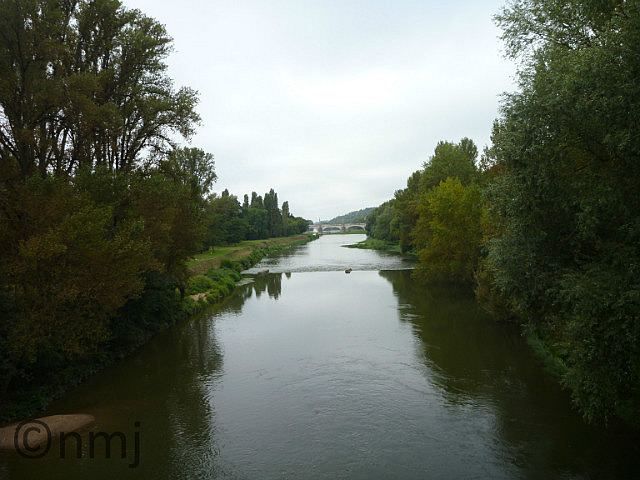
In the meantime, let me tell you what we’ve been up to in France. In our last blog, we covered up to Brittany, but we continued on to the Loire Valley. The day we left Mont-Saint-Michel, we stopped in a small town called “la Flèche” to get some fuel and have lunch. We stopped in a riverside parking area for campervans and sat on a stone wall, right on the bank of the Loire and ate lunch. It was so lovely and sunny and we thought that our time in Loire was off to a good start. We continued on to a campground at a place called Montbazon, which was just south of Tours. It was a quaint little town and a really nice Boulangerie (have I said how much we love French bread?) and the campground was on the bank of the Cher river. Sadly, the campground has seen better days, but it was the only one we found in that area.
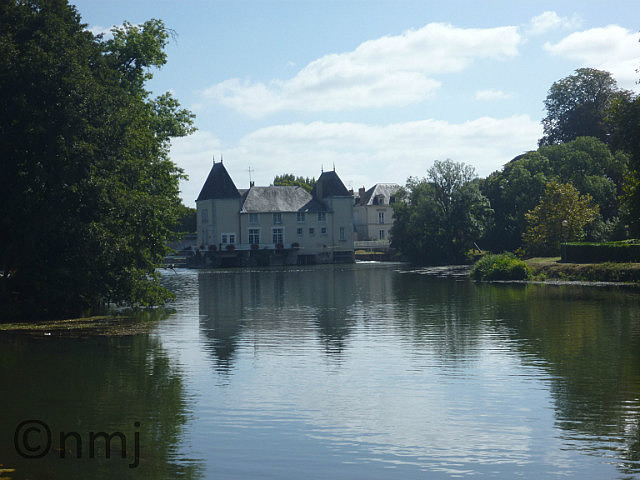
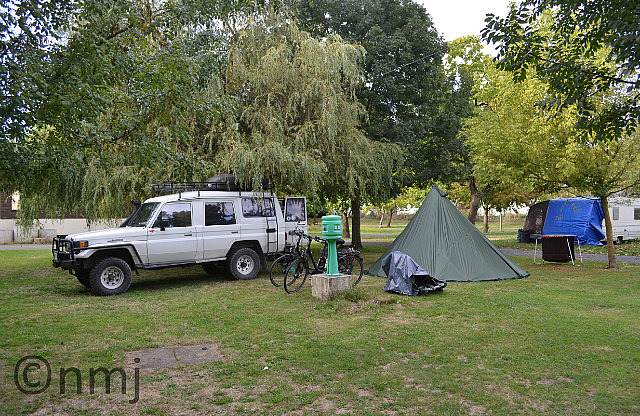
Now, when you talk about the Loire Valley, you imagine that you can cycle along the river and visit all these wonderful Chateaux. Yes, you can, but be prepared to cycle some immense distances! For example, we had picked a couple of Chateaux to visit – Chenonceau, Cheverny, Chambord, Breze, and L’Abbaye Fontevraud. We looked at the maps and also the Loire Velo App and found that yes, you could cycle to Chambord and Chenonceau from Blois, but be prepared for a 60+ km round trip – plus the drive to Blois from Montbazon and back. All of which makes for a long day. Also, when we visited our first Chateau, I saw some of the cyclists who were cycling – they looked hot and sweaty and downright unattractive in their lycra shorts and shirts! But I digress…
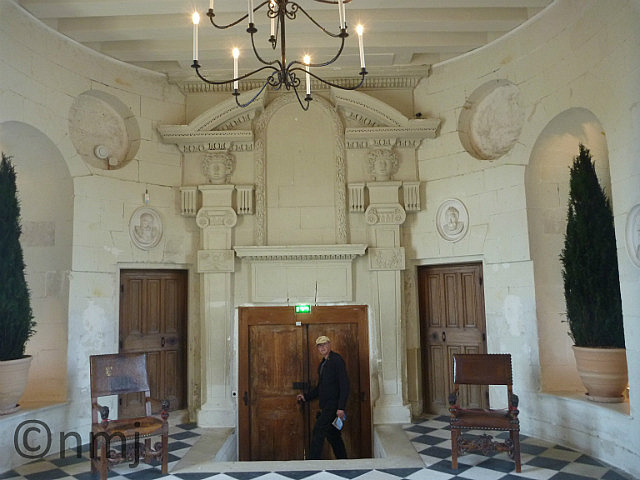
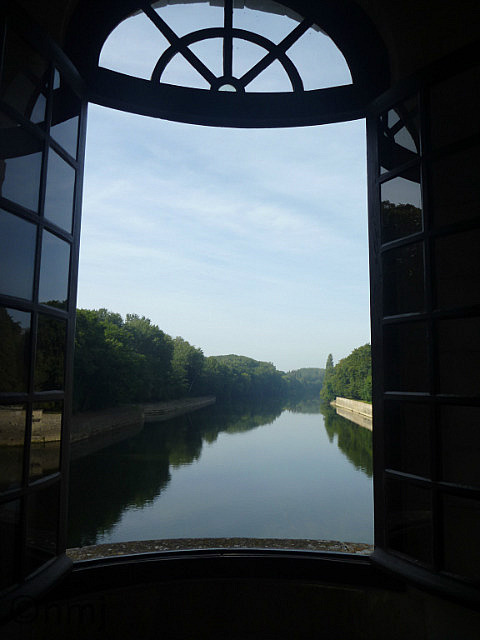
We loved the Chateaux that we saw. Nick pretty much left the choices up to me, but I know that he would soon hit Chateaux-overload, if we tried to see too many in a day, so I set the limit to two per day. Day 1 saw us at Chenonceau and Cheveny. For the uninformed, Chenonceau is the Chateau that was given to Dianne de Poitiers by her lover (the king of France – I can’t remember which one) and then when he died, his widow, Catherine de Medici forced Dianne to swap it for a less beautiful Chateau! Chenonceau is the Chateau that is always photographed with the beautiful arched bridge in the river.
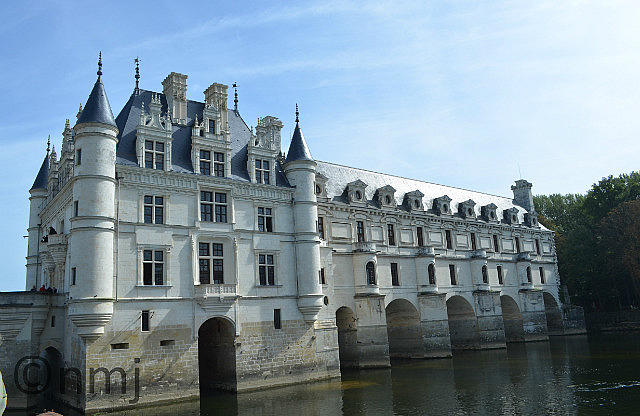
The bridge was added to the Chateau by Dianne de Poitiers and then when Catherine de Medici lived there as the Regent of France, she turned it into a two-storey building – a ballroom and quarters for the ladies and gentlemen at her court. I’m not even going to try and describe it except to say that it is the most stunningly beautiful buildings I have even walked through. I’m not sure, can you call a Chateau a house? And the gardens… beautiful!
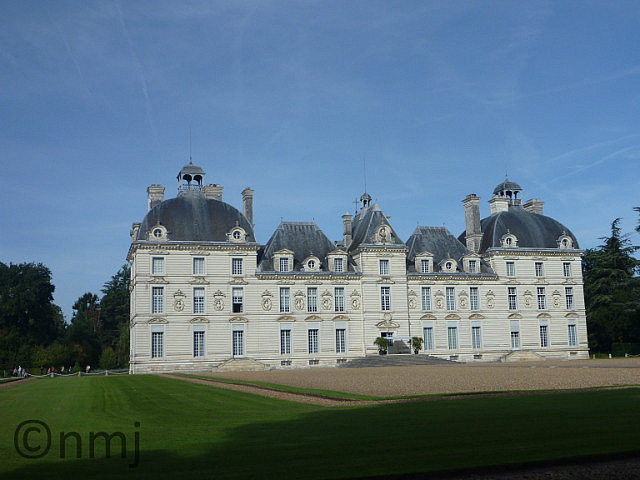
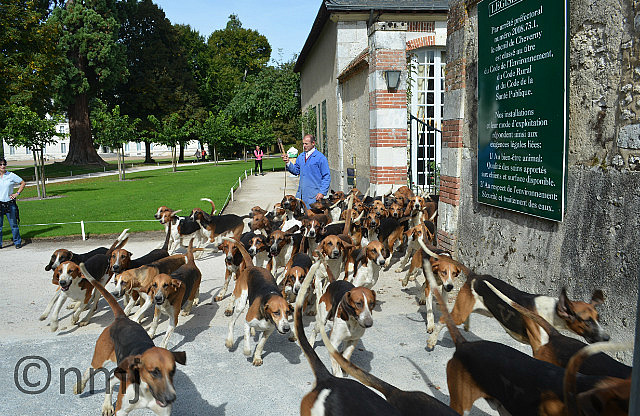
Ok, onto Chateau number two – Cheverny. For fans of Tintin, you will enjoy hearing that Cheverny was the model for Marlinspike Hall – the ancestral home of Captain Haddock. So, of course, there is a Tintin expo in the grounds of Cheverny which MJ had to visit. Cheverny is still occupied by the Marquis (don’t know which one) and his family but another fascinating thing about this Chateau is that they are renowned in the hunting community for their pack of French Hounds (or Harriers, as they are called in the UK) – think of a beagle on steroids! Nick got the chance to observe their feeding time and he says that it was amazing to see them come tearing out of the kennels and straight into the feeding pen where the meat, and other things that they were fed was tipped onto the ground. There was no fights but every dog seemed to get enough food. I can vouch for the fact that the dogs were very friendly and happy to get a pat from the tourists. Inside the house, because it is still occupied, you are limited to what you can see, but again, it was fascinating. There were examples of the first rocking horse (from Napoleonic times) and children’s toys, some beautiful displays of clothes, including the wedding dress of the current Marquise and some great rooms that show how these buildings are such a big job to maintain and/or restore.
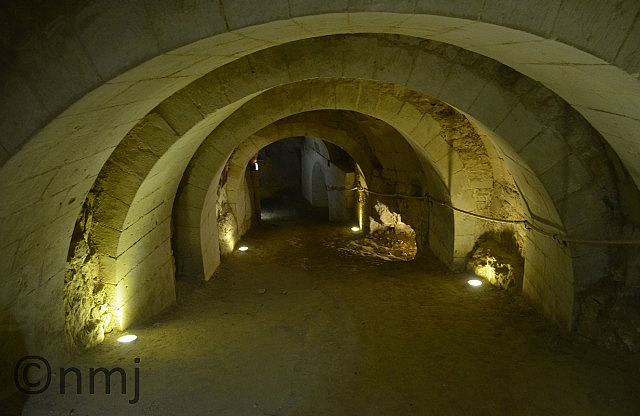
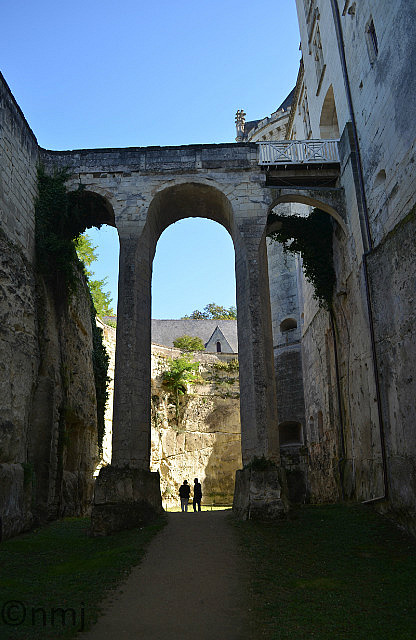
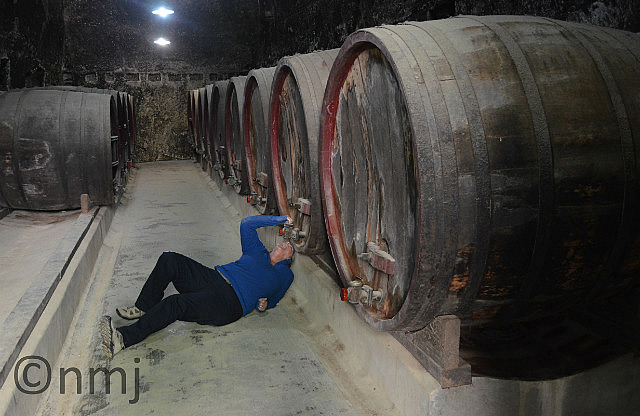
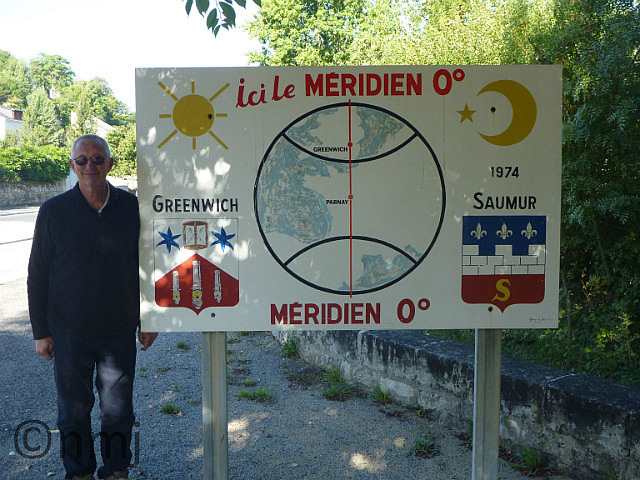
Our second day in the Loire Valley saw us heading in the opposite direction, towards Saumur where we visited the Chateau Breze. Another Chateau, I hear you mutter (& Nick), but the fascinating thing about this Chateau is the underground part. No, not dungeons and stuff, but what are called Troglodyte dwellings. These are rooms, or whole houses that have been chiselled out of rock and there wasn’t a single TRG Officer (NSW Police) or Technical Rescue Officer (QFRS) in sight! Breze has a huge dry moat around the aboveground part of the Chateau and it also provides access to the underground portions. There are wine cellars, a bakery with an upstairs room where the bread would be put to rise and the keep the yeast fresh, an ice pit which was used to hold ice and snow to keep food fresh, and there were these amazing rooms. Apparently these sorts of dwellings were common in early days and were used for defensive purposes. There were places where you could see niches that had been cut into the rock walls to take wooden barricades to slow down invaders, and there were also mangers for the horses and smaller animals in the rooms. Another strong recommendation!

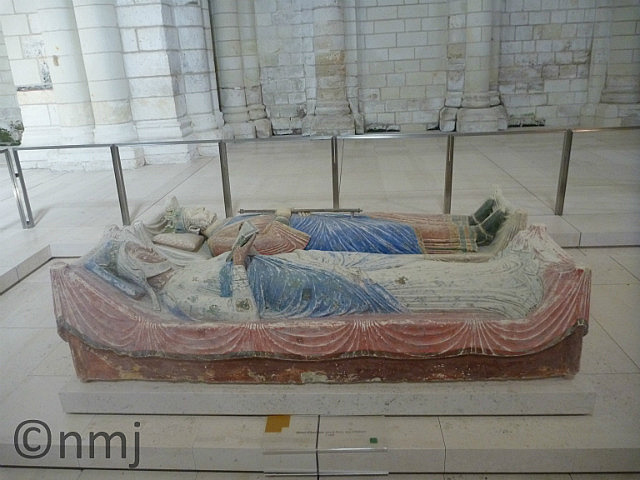
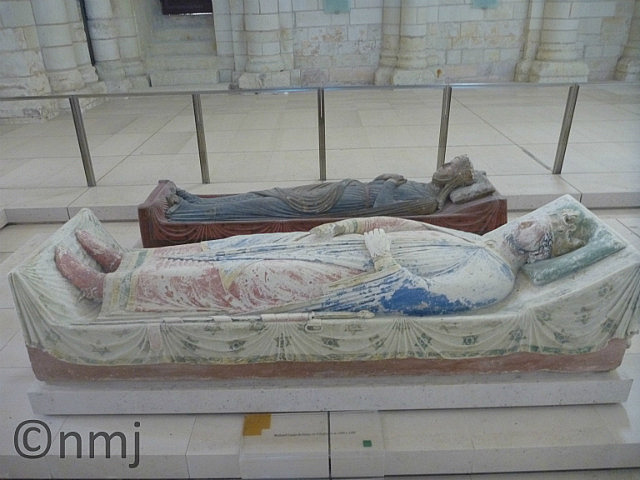
And our second visit for the day was to the Abbey Fontevraud. Who remembers watching Robin Hood (the TV series) with Richard Greene when they were kids? Both Nick & I have our hands stuck high in the air! I loved that show! So what does the abbey have to do with Robin Hood? Well, Robin Hood was protecting the poor downtrodden English peasants from the evil Prince John whilst King Richard the Lionheart was in the Crusades. So, Richard the Lionheart is buried at Fontevraud Abbey, as are his parents – King Henry II and Elinor of Aquitaine. The Abbey was emptied as a result of the French Revolution – the nuns were kicked out and told to become ordinary women, and then during the time of Napolean, the Abbey was turned into a prison until the mid-1960s. By all accounts, it was a pretty horrific prison with one of the inmates was the French writer Jean Genet – I read his book “Our Lady of Flowers” when I was in High School – totally inappropriate literature for a convent-bred schoolgirl, but hey, I was a rebel.
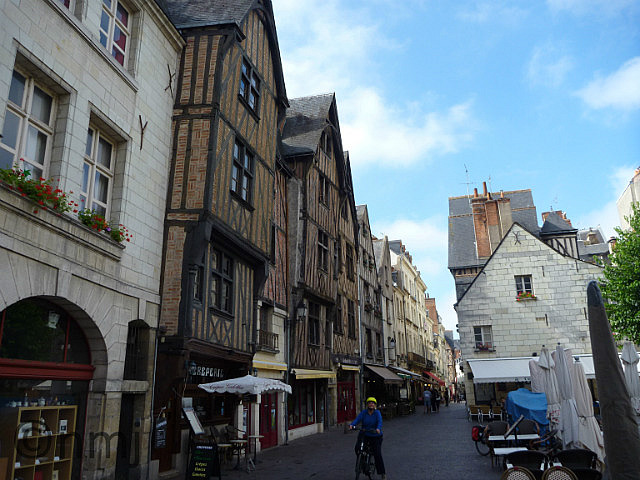
Our final day in the area didn’t start well – the manager of the campground came to explain that there would be no water for about an hour or so. We didn’t feel that would worry us as we had already had our showers and were getting ready to drive towards Tours so that we could cycle along the Loire River. We were determined to cycle along the Loire River!!!!! Anyway, after a great day in Tours (really great town with lots of quaint old sections scattered around), we returned to the campground to find that there was still no water! So, dinner that night was McDonalds (they had WiFi and toilets). Thankfully we were back on the road the next day, but when we left, there was still no water and the manager was saying that she would have to close the campground early because no-one could tell her when the water would be back.
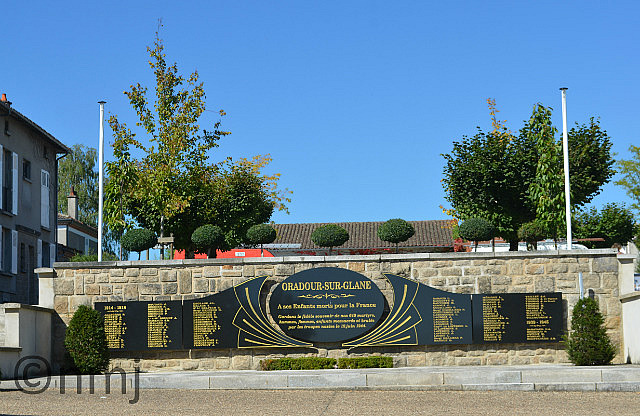
When we left the Loire, we still hadn’t been to see Chambord, so that was definitely going to need a return visit – but it will have to wait until after Spain & Portugal. Instead, we headed towards Limoges. On our way there, we did a bit of a detour to a truly depressing memorial to the senseless murder that was done during the Second World War – we visited a town called “Oradour-sur-Glane”. Apparently, on 10 June 1944, after the SS had moved into this area, they decided that they would make an example to discourage the locals from helping the Resistance and causing trouble. So, they entered a small village, separated the men from the women & children, who were herded into the Church. On a signal, the men were machine-gunned and when the women heard this, they apparently tried to rush out of the Church, and they were forced back in by more machine-gun fire. Finally, all the houses, businesses & the church were burnt. There was only a single survivor. After the war, De Gaulle ordered that the town was to be kept “as it” as a reminder of the war and a new town was built next to the destroyed town. It is a truly depressing place to visit but also an important place to see, to remind you of what must never happen again.

At home, one of our favourite shows is “Grand Designs”, but the original English show, not the Australian version. One season, they did a series called “Grand Designs Abroad” and we were both struck with one particular episode which was about an English couple (Doug & Deni) who had fallen in love with an abandoned Manor house in the La Creuse area, which had been burnt by the Nazis during the war because it was being used by the local Resistance. When they showed this house on television, it was four floors (basement, ground floor and two upper floors, as well as a roof space, but there were NO floors and the walls were bare stone. Well, during the course of the show, Doug & Deni oversaw the new roof, beautiful wooden windows and doors, built new floors (including manhandling joists into place themselves) and started to kit out the kitchen, salon and first bedroom. They were talking about turning it into a Gîte (self-catering accommodation).
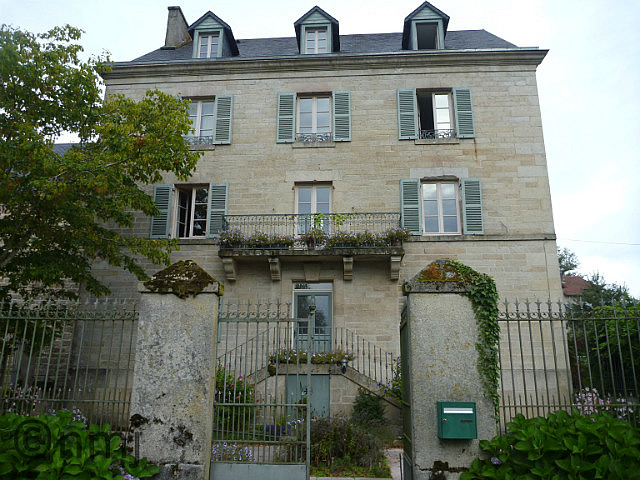
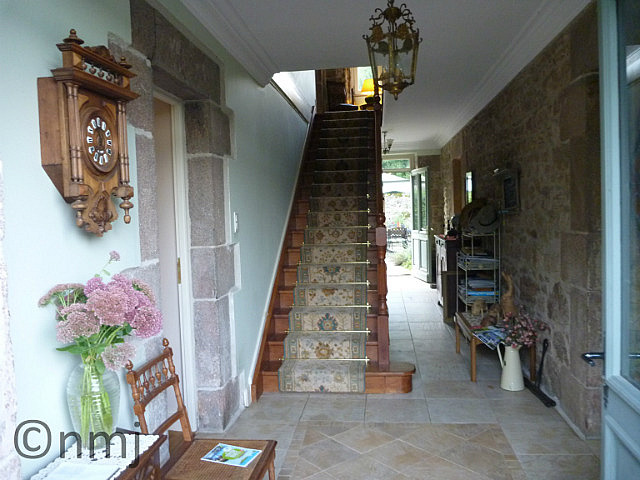
Well, after a number of years, they have finished the house, restored the barn and now “Chez Jallot” is a beautiful Chambre d’Hotes as well as having two Gîtes (www.chezjallot.com). This was one of those breaks that we had promised ourselves on our travels – a couple of nights of luxury! We stayed in the Aubusson Room (Aubusson carpets come from this region of France) for two nights. We had dinner at the house with the other guests and spend out free day cycling around the area and through some of the little hamlets nearby. It was probably a good thing that we were cycling because both nights, dinner was a four-course meal with an Aperitif and wines. It was quite funny on our first night because one of the guests had a real hunkering for the host of Grand Designs – Kevin McCloud, and kept pestering our hosts with questions like “what was he like?”, and “is he a good-looking in person as on TV?”. It was probably a good thing that she didn’t find out that Kevin McCloud stayed in the same room as she and her husband had at Chez Jallot, on his return visit!
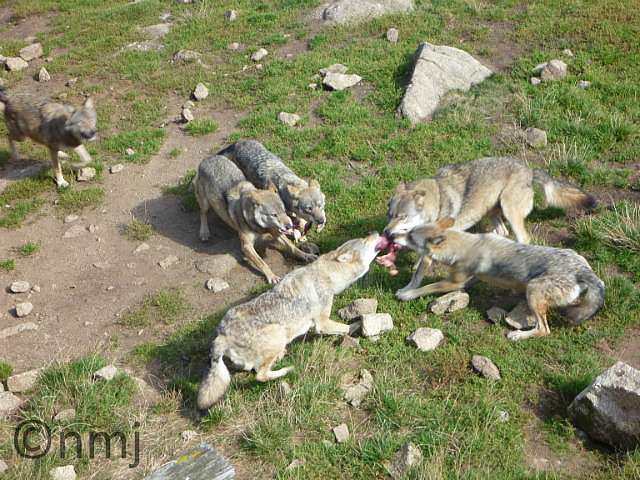
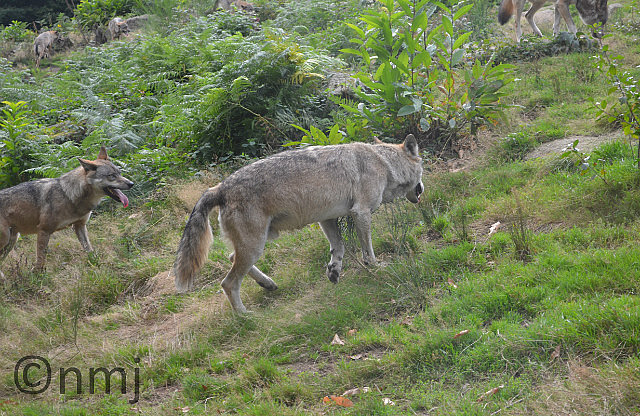
Whilst we were at Chez Jallot, we heard that there was a Wolf Sanctuary nearby, so of course, we had to visit it. Over the years, wolves had all but disappeared from Europe, with the largest density of wolves remaining in Spain (only about 2000), but lately wolves are making their way back into France. It was interesting to see the wolves in their “natural” environment and we were lucky to be there during their feeding time – thankfully on the safe side of the fence.
After leaving Chez Jallot, we headed down towards the Dordogne region and stayed at a campground in the mountains, near a beautiful village called Aubazine.
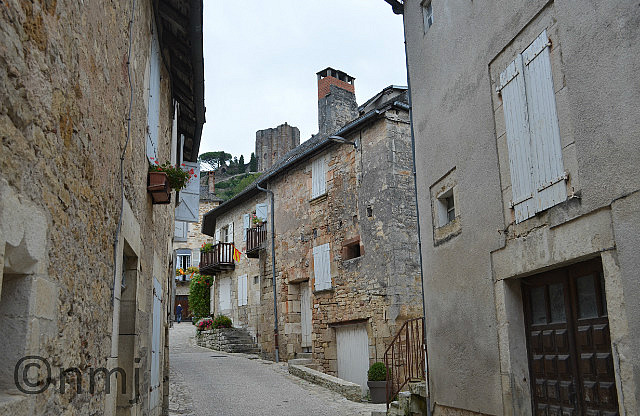
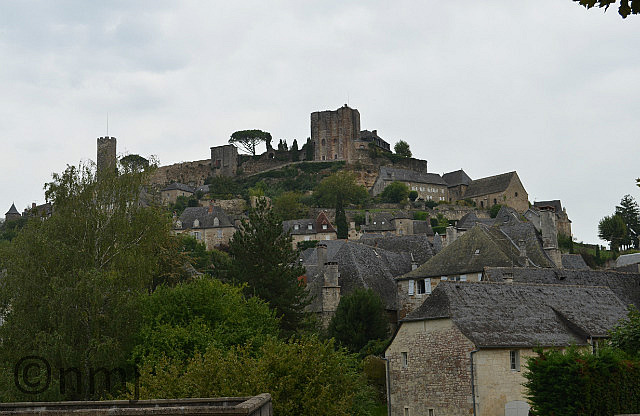
France has a number of villages that have been recognised for their beauty, the whole French character thing, but Aubazine is definitely one of those villages. All the buildings are old and built from stone and perched on the side of a mountain (called a Bastide Town) and the roads are narrow, with no footpaths and the houses go right to the road. The road twists and turns back on itself as it wends it way up and down the mountain. A great road for a motorbike or a small call but not the best for a Troopy. Nick was hanging on to the steering wheel and MJ was gripping the grab-bar!
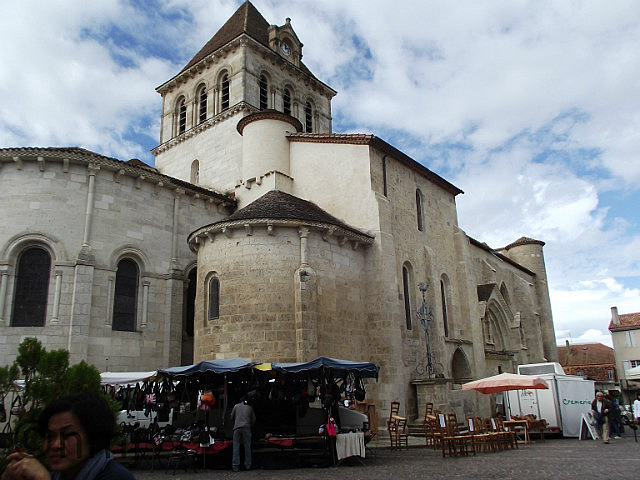
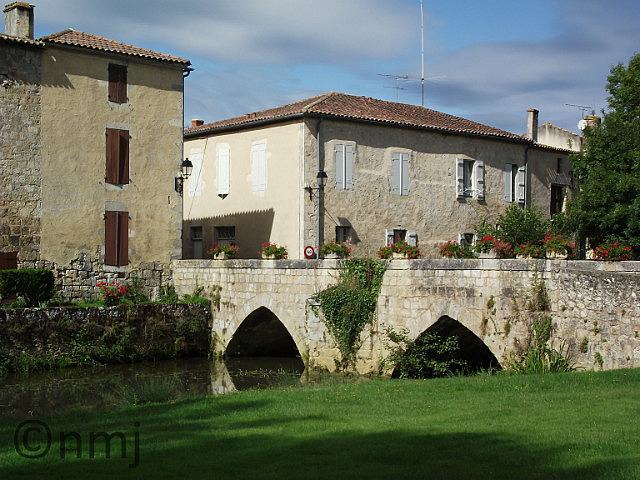
Our final nights in France (this part of the trip) was in the small village of Poudenas. Through the kindness of a schoolfriend of MJ’s, we were introduced to an Australian couple who had bought a farmhouse (all three floors of it) and the yard around the house which they had planted out with all sorts of fruit & nut tree, plus they had a vegetable patch, chickens and two very demanding Border Collies (Pukey and Swift). We stayed with Marguerite and Keiran for a few nights and cycled through French laneways, abandoned railway lanes, along a couple of D- and C-roads, exploring and visiting French village markets and some more Bastide towns, such as Fources, Mezin, Lavadac (these are the names I remember). Marguarete cooked the most delectable meals for us every night and I left there feeling inspired for how I want my garden to be at the farm, when we finally finish travelling and go home. Their home was, however, chaotic! It is badly in need of repair and each job is such a huge undertaking, I don’t know where they will start. But they have plans and are talking about being there for another 15 years or so before heading back to Australia. All I can say is “Good Luck”! It is a huge undertaking but if they complete it the way they are talking about, then it will be the most gorgeous home.
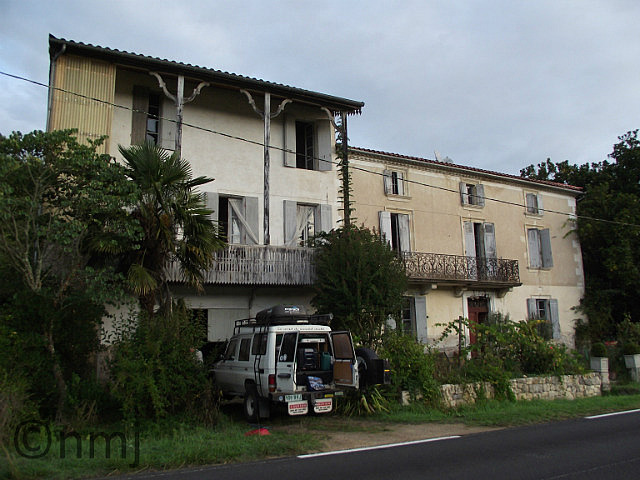
Whilst we were with them, we heard of many quaint French real estate customs, such as the previous owner continues to come to the garden, with her friends, to pick figs from the trees. And when Madame Colange bought the house, there was a blind lady living in one of the rooms (like a flat), so Mme Colange had to look after her until she went into a home before she got vacant possession of the house! And if you have a block of farming land and you don’t farm it, then another farmer can claim it because you aren’t working it and that’s it, it is no longer your land! And when you buy a house, if you are lucky, the previous owner will move everything out but if there won’t be room for all the furniture, pictures, junk in their new home, then they will just leave it behind! Maybe, I don’t want to buy in France after all, but I would love to chance to live there and experience the lifestyle.
Before we see any more of France, we are going to finally face a French toll road and drive down to Spain. Why the toll road? Because it will be the most direct route through the Pyrenees. But we hadn’t realised how expensive it would be! For about a distance of 15kms, we had to go through three (3) toll gates and paid out nearly 10 Euros in tolls!
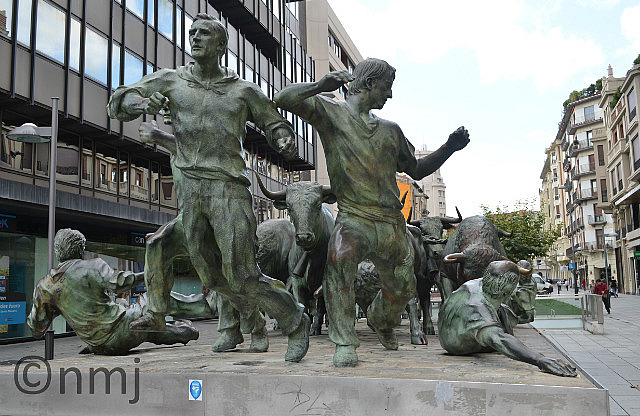
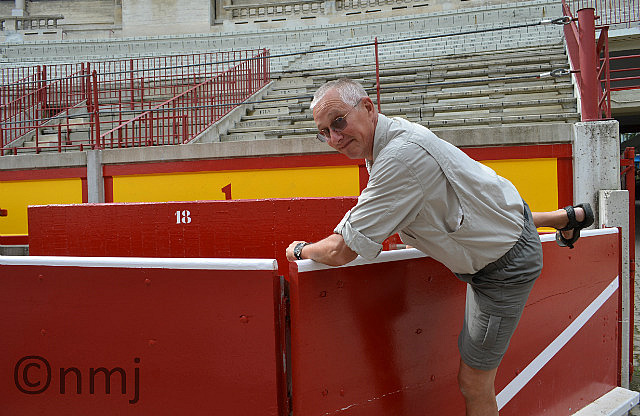
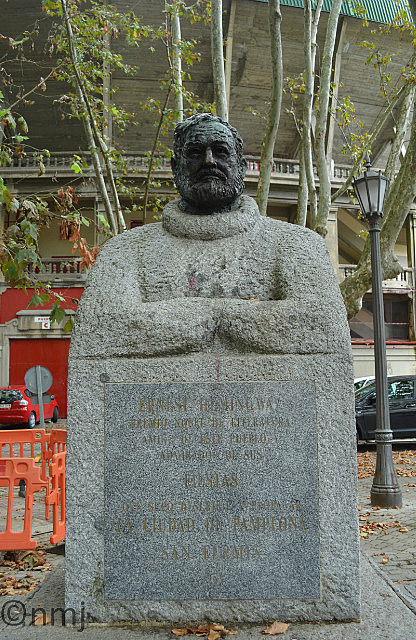
Once we got into Spain, we discovered that Spain has some very good non-toll Motorways. Yes they have tollways too, but they are AP roads, so are easy to avoid. Our first stop in Spain was Pamplona but because it wasn’t July, we were in no risk from the Running of the Bulls which happens during the San Fermin festival. Our campground was about 10kms from Pamplona but there was a dedicated cycle track (and footpath) that wound its way along the river into Pamplona (France, you could learn something about cycle paths).
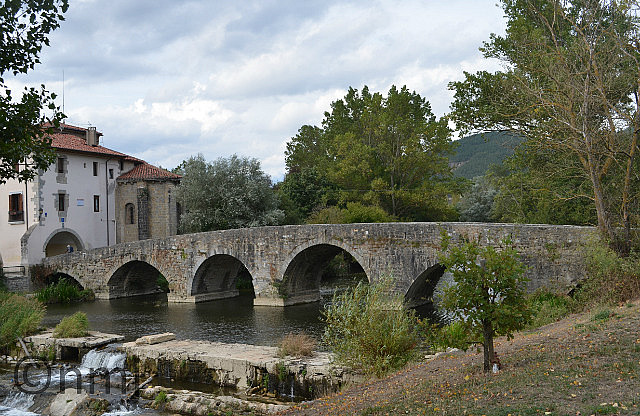
We discovered that Pamplona is one of the towns on the Caminos of St James – this is a pilgrimage walk that can start in any one of 14 locations but all routes head towards Santiago de Compastela. Nick was amazed at the number of people (pilgrims) who were walking along the well-signposted route. The walk can take up to 32 days to complete it, depending on where you start. Nick is already talking about wanting to do it as a fitting alternative to the Nijmegen Four-Day Marches. I will have to book him in to see a Shrink when we get home! Or maybe he can convince Rob (van Geene) and Doug (Townsend) to join him on the walk. I’ll hire a campervan and meet him at the other end!
This track across Spain is taking us to Portugal, but you will have to wait for the next instalment! Same Bat-Channel, same Bat-time!


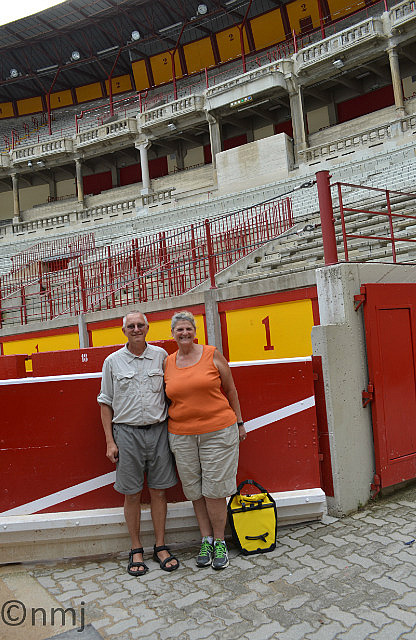
No bull in sight – anywhere!
 Nick & MJ On The Road
Leave a comment