Lubawka, Poland
We have finally left the countries we are comfortable in and visited our first new country for a while – the Czech Republic. Whilst it isn’t a first visit for MJ, who caused havoc in a drinking tour with Di Sinden in 2008, it was Nick’s first visit.
And again, we had the good fortune to have met a local in our travels, who was looking forward to playing tour-guide for us. We met Zdenek last year when we visited the Bastogne Museum in Belgium, and on our first full day in Prague, he picked us up and took us out of town to visit an old Castle called Krivoklat. It dates from the 12th Century and was more of a favoured hunting lodge. But these days it is very popular as a film set for old movies. Whilst we were there, there was still evidence of some pretty major construction in the Yard that is for a film. After much history, the castle was owned by the Fustenburg family, who also owned two Czech breweries, before it was sold to the Czech Nation for lots of money! In fact, this family seems to have made a practise of selling estates to the Czech Nation – they also sold an estate at Lany which is now the summer residence of the Czech President.
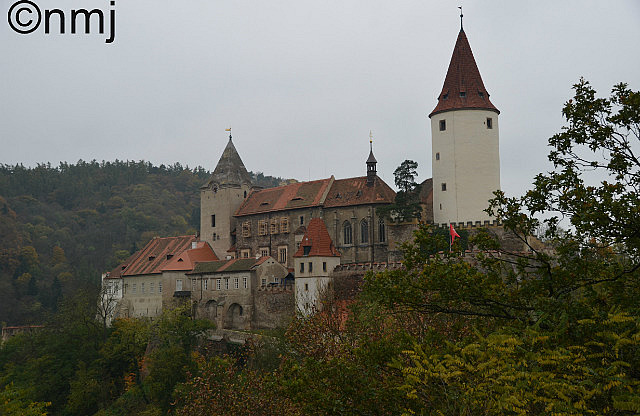
the valley
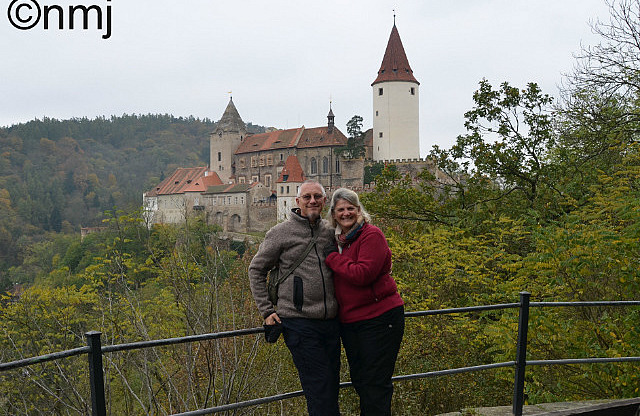
After an amazing visit to the Castle – with almost no tourists around, we met Zdenek’s family (wife & son) and the newest member of the family, a 2-month old Newfoundland puppy! Try as I could, I just couldn’t fit him into my handbag!!
Because he knew of Nick’s interest in military history, after lunch, Zdenek took us to visit an old Bunker which was part of the Czech-version of the Maginot line in France, and probably about as successful! It is a private museum but it is fully equipped with all the original equipment, including two heavy machine-guns, uniforms, rifles, even down to rations.
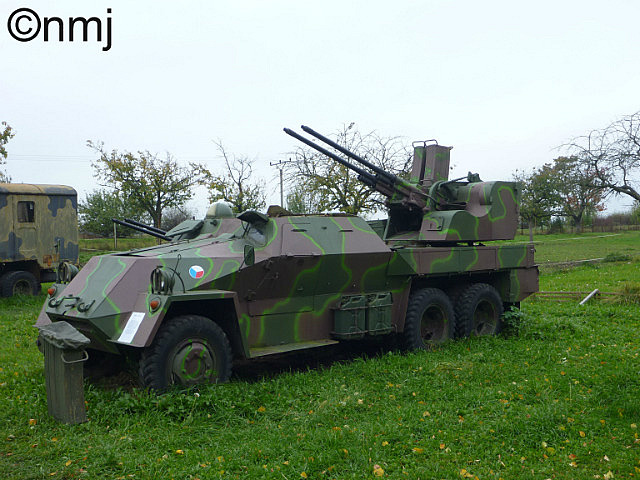
Or for the ignorant, an anti-aircraft gun.
There was also a collection of Soviet-era trucks and armoured personal carriers in the yard attached to the Bunker. It’s a good thing that Zdenek speaks such good English because Nick has no Czech and the owner of the Museum only spoke Czech.
After a long day, it was time to head back into Prague and return to our Campground which was a great find – after a short walk from the campground, it was only about 15 minutes (by tram) from the Old Town, the facilities (showers & toilets) were heated, we could get fresh bread every day and there was very good internet access. All for a very reasonable price – about $A25.00 per night!
We also discovered that the public transport system in Prague is very good. For about $5-00 a day, you had a 24-hour travel card which could be used on buses, trams and trains. So it was time to head off to explore Prague Castle. A point for travellers to remember – don’t arrive at Prague Castle on a Sunday morning, expecting to get into St Vitus’ Cathedral! At least not before midday, and of course that clashed with the Changing of the Guard ceremony. But we waited for the Changing of the Guard and then went into the St Vitus Cathedral, and the wait was worth it. But, having visited the Cathedral in 2008, MJ noticed that there was less access around the Cathedral, but you still great views of some amazing Stained Glass windows.
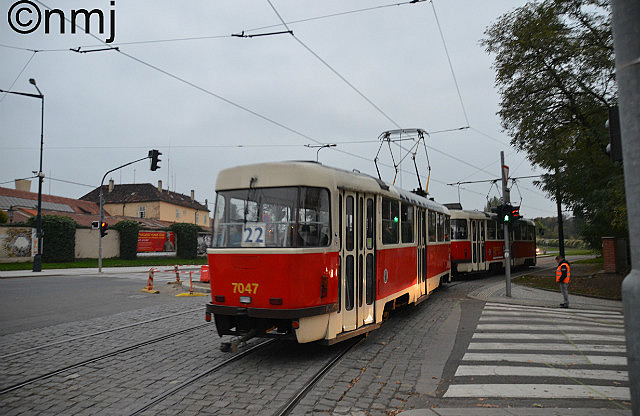
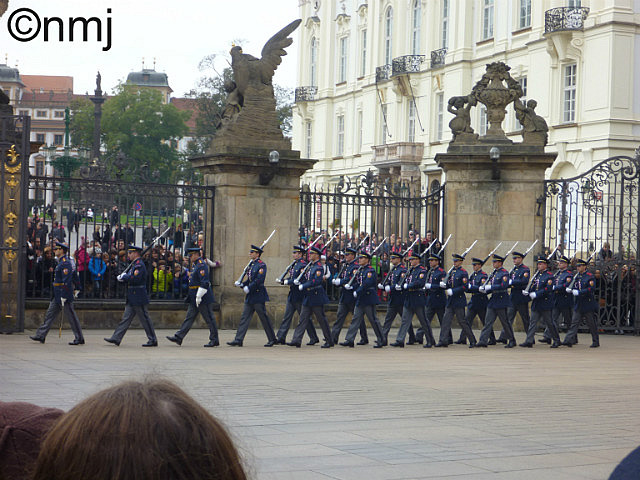
This was our fourth Changing of the Guard ceremony – Seoul, London, Stockholm and now, Prague.
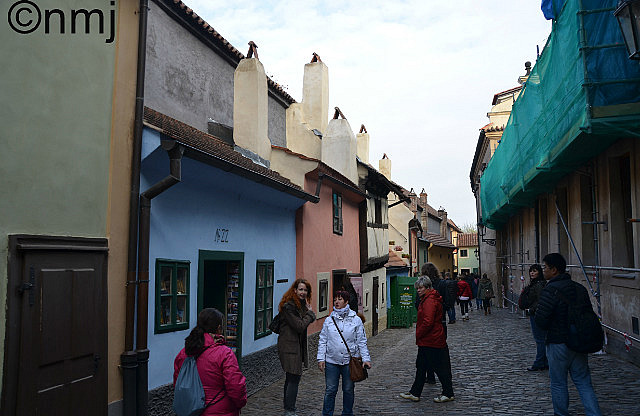
Sadly the Royal Palace was closed so we visited the Rosenberg Palace instead. This was apparently a centre for Distressed Noblewomen (read “poor spinsters”) that was established by the Austrian Empress Marie Therese when Prague was part of the Austro-Hungarian Empire. We also saw the St George Basilica and walked along the Golden Lane – which has undergone some major renovation since 2008 and was much better. There were still lots of quaint shops but there were also examples of how the people lived in these tiny little buildings.
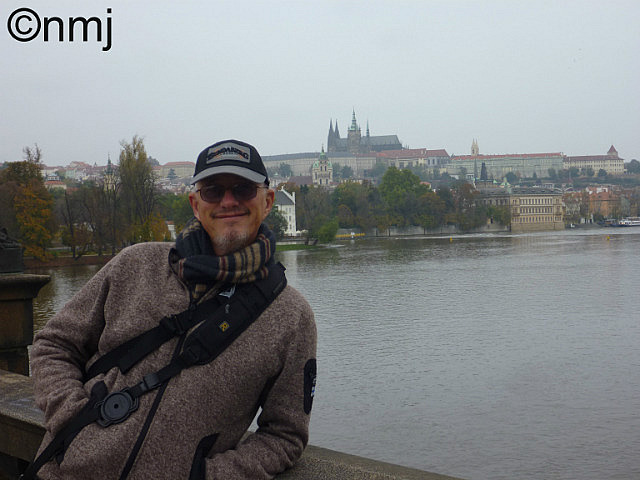
And by “cool”, we mean “cold”!
Whilst walking around Prague Castle, we discovered that there was going to be a Gala Concert that night in the St George Basilica with a 5-piece String Ensemble (2 Violins, 1 Viola, 1 Cello & 1 Bass) and a Soprano. The programme was a wonderful sampler of classics including Smetana and Dvorak (of course), but also Schubert, Vivaldi, Bizet, Mozart & Brahms. So we purchased a couple of tickets (660 CKr) and then headed back down into town to find somewhere for an early dinner.

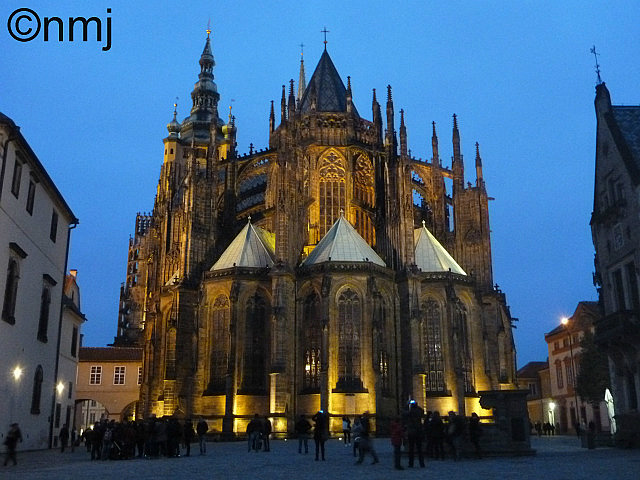
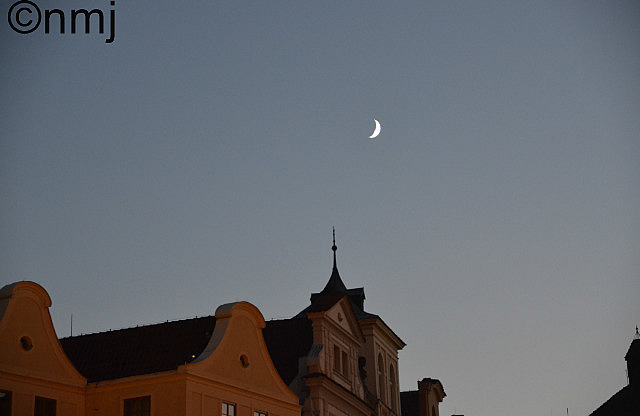
After the concert, as we came out from the St George Basilica, the sky was glorious.
Thanks to the suggestion from Sue & Ron, we went looking for the Lennon Wall and just around the corner was a great place to get an early dinner. We had been told that their specialty was soup served in a cob loaf, but the Soup of the Day was Cabbage Soup and there was no way Nick was going to eat Cabbage Soup, so we settled for Pasta instead!
Our third day in Prague saw us heading out of town to visit Theresienstadt (Terezin) which was an old Fortress and Garrison town that was built by the Austro-Hungarian Empire as a defence against the Prussians. It never saw any action as a Fortress and the small Fortress was used as a Prison. It’s most famous inmate was Gavrilo Princip, the guy who lit the fuse for the start of the First World War with the assassination of Archduke Franz Ferdinand. He was too young to be executed and so he was held in isolation for 4 years before he died of consumption. During WW2, the Small Fortress continued to be used as a prison by the Germans but the Garrison town was used as a Ghetto to isolate Jews who might cause embarrassment due to their fame or connections. It was also used as the showpiece camp to convince the Red Cross that the Jews were being treated humanely.
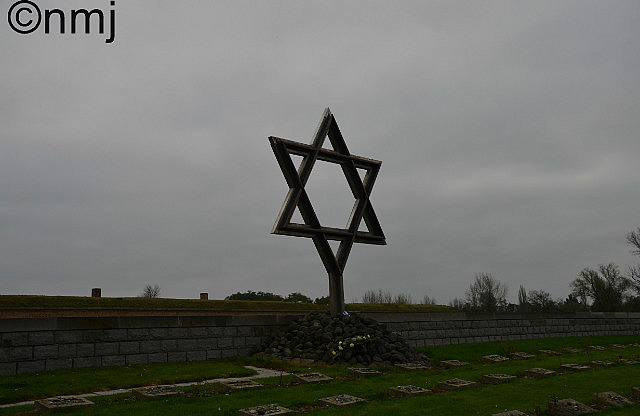
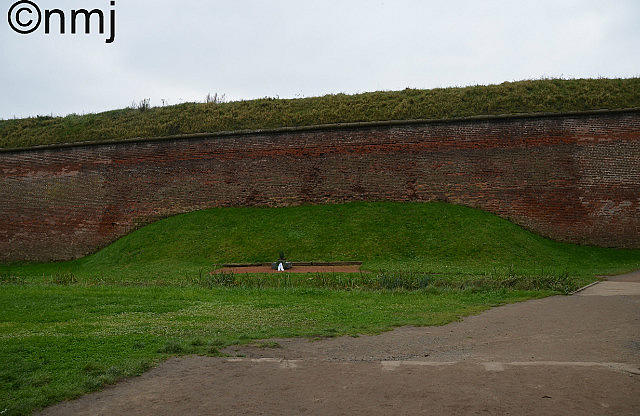
One of the most daunting things that we saw there was in the Museum in the Ghetto, which was located in one building that was used as a Children’s Homes for orphaned Jewish children. There was a display of drawings done by a number of different children that showed aspects of their lives – sometimes before the war, sometimes in the Ghetto, and some drawings were of the Nazis beating some of the adults. It was all done some simply and these drawings should have been of children playing games, playing with their pets or their families, but instead, the subject matter was so grim. It was so sad.
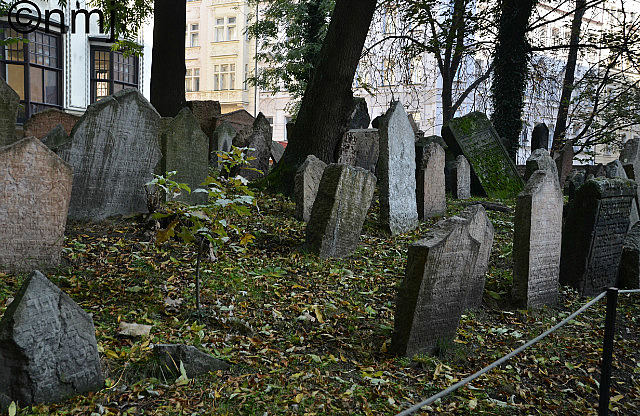
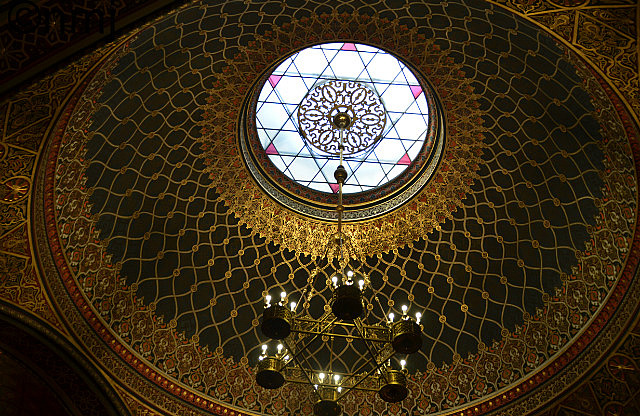
One of the highlights of Prague is a visit to the old Jewish Quarter. There you can visit a number of old Synagogues which have displays of different aspects of Jewish life, as well as the old Jewish Cemetery which was closed in the late 1700s. Whilst the Jews were given permission to have a cemetery within their Quarter, they couldn’t get permission to expand it as it filled, so they would add more soil and bury the next layer. In the end, it is 10-layers deep and the result is a higgledy-piggledy array of tombstones. Sadly, Nick discovered that his camera continues to have a fault – it seems that when he is in an interesting location where photos are not permitted, his camera just goes off and takes photos on it’s own. We must definitely get that fixed!

Our last tourist stop in Prague was a visit to the Powder Tower, which is an original City Gate and it was also the starting point for the coronation procession of Czech Kings. Today, you can climb up 186 steps (my poor sore knees) and at the top, there is the best 360° view of Prague. As we were walking back towards to tram station, we passed a sign advertising Thai Massage. Within an instant, Nick had stopped and we were heading inside to get a couple of massages – a Thai Massage for Nick and a Foot Massage for me. What followed was 30-minutes of pain and torture, but the end result was pure bliss! After all the walking we had been doing, I really needed my poor sore tootsies to get a massage.
Out last day in Prague was an essential admin-day, which meant washing our clothes and getting them dry. I have discovered that even if it is a “sunny” day, clothes do dry, but as it gets dark by about 4pm, by the time we get back to the van, the clothes are cold and damp. This is when we discovered that the diesel heating in Oscar can also double as a drying room for the washing.
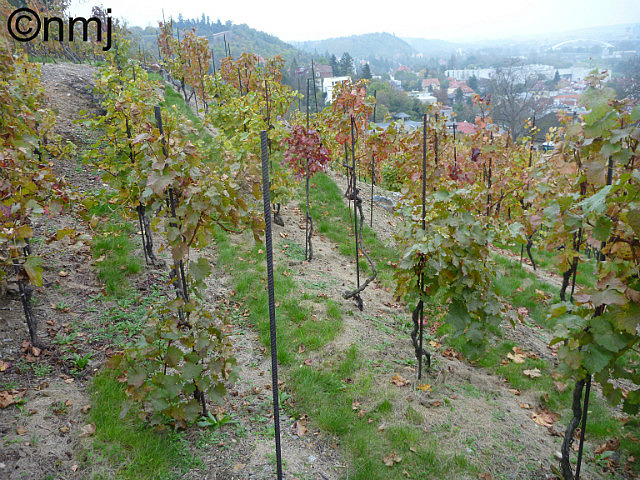
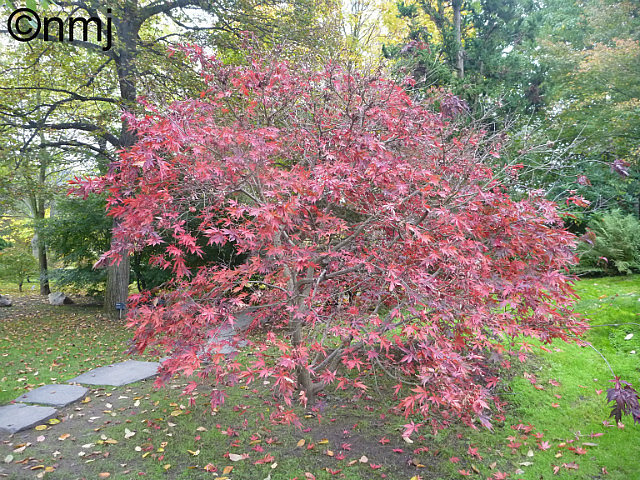
After doing the washing, some repairs and had most stuff packed up, we decided to go for a bicycle ride and discovered the Botanical Gardens, which were full of lovely autumn colour. But they also have a vineyard in the Botanical Gardens – St Claire’s Vineyard, which used to belong to the Troja Chateau and it reputed to have been started in the 13th Century and produces a wide array of white and red grapes today. It is partly for the making of wine but also as an exposition of Czech viniculture. The vines are planted on the south-facing slope overlooking the old Chateau. It was a cold afternoon, but we enjoyed our exploration of something a bit different in Prague.
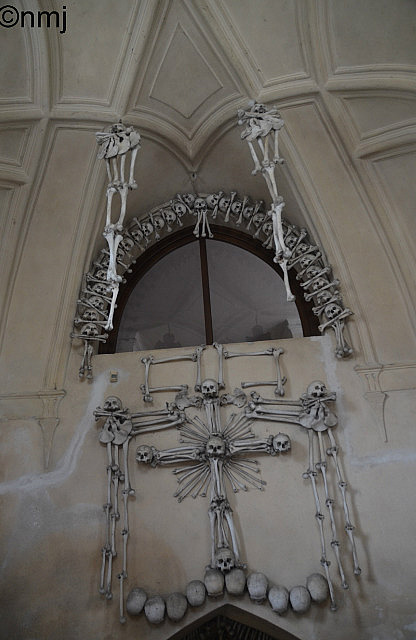
On our way out of Prague and the Czech Republic, we made one last stop at a town called Sedlec to see the Bone Church. This is a small chapel that was built as an Ossuary and according to legend, the abbot of the Cistercian Monastery was sent to Jerusalem in 13th Century and he brought back a jar of soil from Golgotha and sprinkled it around the Church. As a result, every man and his dog wanted to be buried in Sedlec with the result that some 40,000 people were buried there. Obviously things got a bit overcrowded, so the graves were dug up and the bones were placed inside the Ossuary. But when I say “placed”, think patterns and designs. There are huge piles of skulls, chandeliers made of bones, a large coat-of-arms for a prominent family totally made out of bones. It was a bit weird, but very interesting.
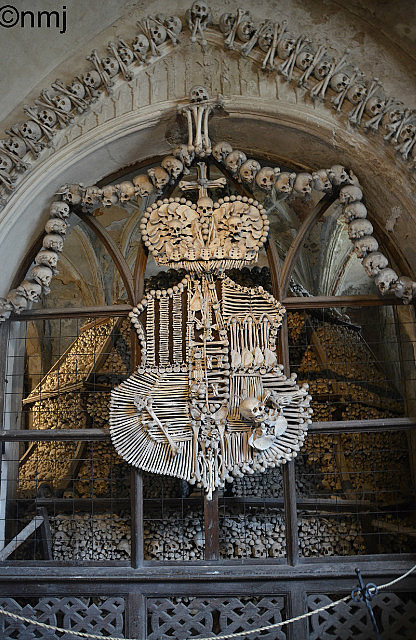
Family Crest!
But now we are a matter of miles from the Polish border and we have a long drive to Warsaw ahead of us… You will just have to wait for the next instalment.
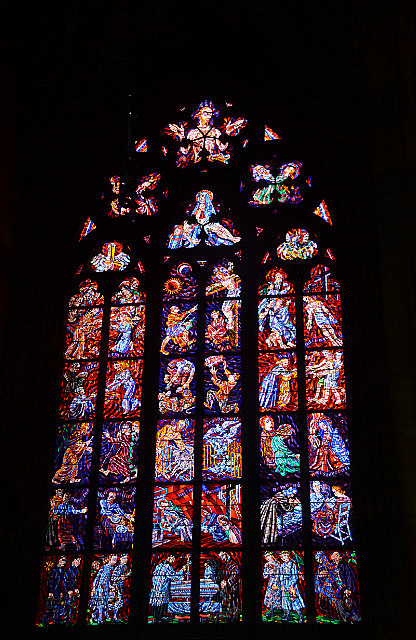
St Vitus Cathedral
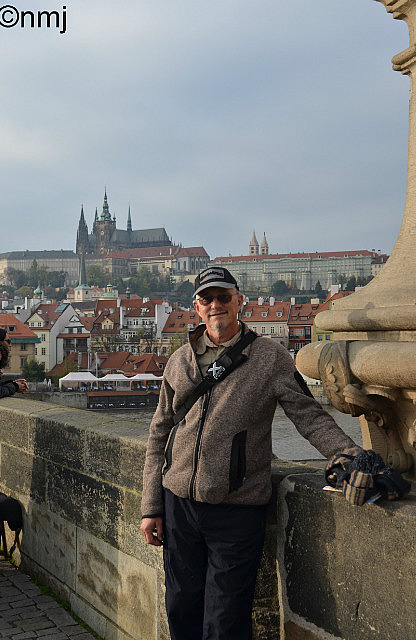


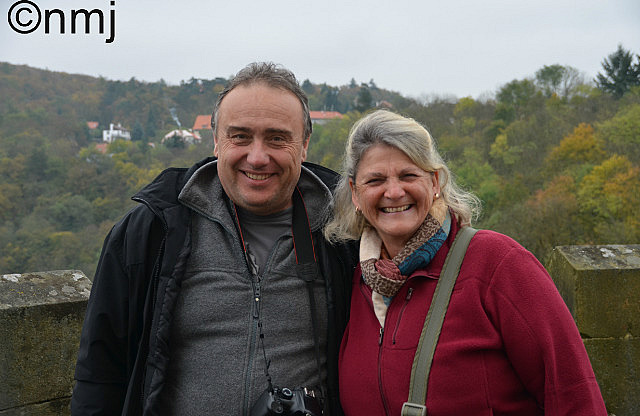
 Nick & MJ On The Road
Leave a comment