Alexandroúpolis, Greece
Well, we managed to get out of Istanbul in one piece, and that was certainly a feat! We are having the usual arguments with the GPS and sadly, that means that MJ has to stay awake to double-check the navigation! For those who know MJ’s habit of sleeping in moving vehicles (car, bus, train, motorbike), that is a real challenge for her!
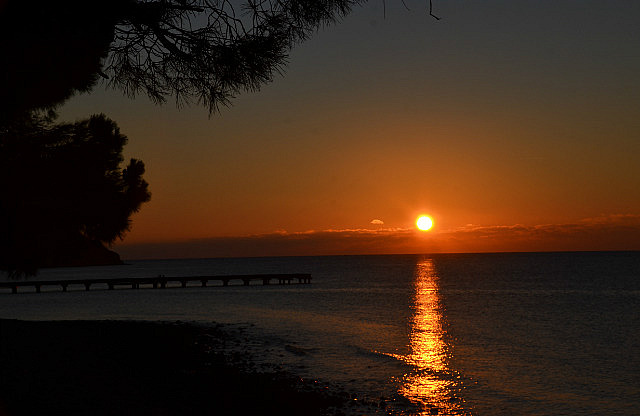
Our first night out of Istanbul was spent free-camping by the side of the Aegean and we celebrated by having a Barbie! BBQ lamb cutlets, with salad – it doesn’t get much better than that!
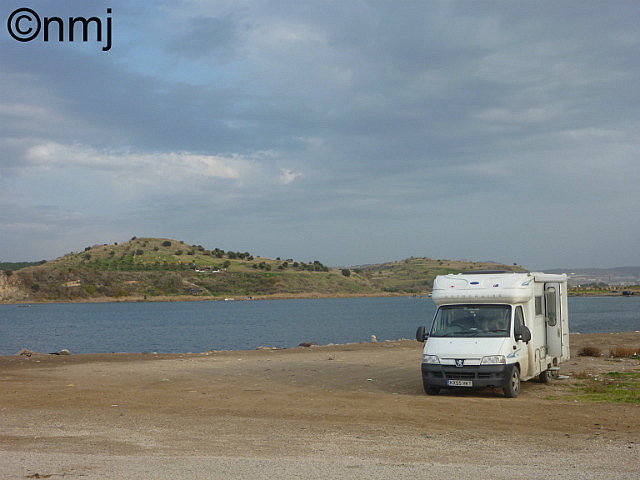
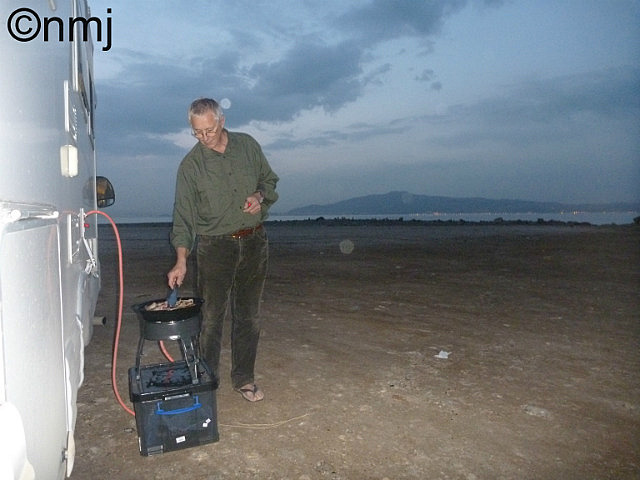
We are heading for Pamukkale with it’s warm springs and Hierapolis which is an old city that has been built/occupied/extended/destroyed by the Greeks, Romans, Arabs, Turks, for the past 1850 years! Camping by the Aegean – Lamb BBQ for dinner, now this is the life! Whilst the spot we had picked to stay was classified as a “Stellplatz” in our book (an approved spot to free-camp) and according to the listing, was “hard-stand”, the only hard-stand around was on the road! The spot where we camped was the local fishing spot for the locals, so there was a lot of traffic in the evening and early morning, but overall, it was a good location.
Now that we were out of the city, we were seeing a very different looking Turkey – a curious mix of rough tracks, badly pot-holed single-lane roads and nice wide highways. Hey, we even encountered a couple of toll-roads and we were very thankful that we had pre-purchased our toll-pass so we could just sail through. The towns and villages are small but very tightly packed with a lot of apartment-living. Another thing that stands out about Turkey, apart from inordinate number of well-fed stray dogs and cats, was the rubbish left by the road and that ends up strewn across the countryside – sadly, it did detract slightly from our enjoyment of driving through Turkey.
But now we have reached Pamukkale and Hierapolis. As we had arrived at Pamukkale in the mid-afternoon, we decided to go and have a look at the limestone pools first and then on the next day we would visit Hierapolis, but we discovered that both are within the same complex, but we were still glad to have made the slight detour because there were a lot of buses in the car park and one was marked “Lourdes Hill History Tour”! Was it our Lourdes Hill (local Catholic High School)? Yes, it was! What a coincidence! We had a chat with some of the members of the group who told us that they were doing a two-week Ancient History tour of Turkey and Greece.

We decided to wait until the next day to spend our money on the entrance fee, so we headed off to look for our campsite. As I’m sure I’ve mentioned before, as we are travelling in winter, most of the campsites are closed. We use a number of resources to find places where we can camp, get fresh water, drain out the waste water, etc. Nick had located a campsite near Pamukkale and so we went looking for it, using GPS coordinates as the guide. It turns out that the campsite was right at the top of the hill overlooking Hierapolis, the limestone pools and the town of Pamukkale, but boy! was the road up interesting! We are talking single-lane bitumen road, with lots of pot-holes and lots of very tight corners, added to that was the habit of local sheep and goats to congregate on the side of the road to feed on whatever vegetation they could find! But we made it, had the campsite to ourselves and proceeded to relax!
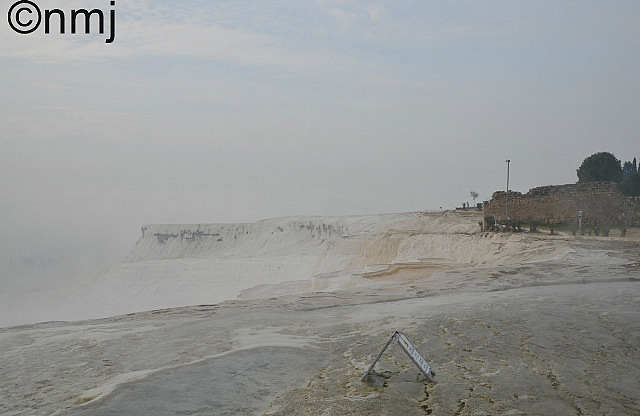
For those of you who don’t know what Pamukkale is, it is a region/town in Turkey where there are naturally warm springs where the water has a very high calciferous content. This means that when the water flows, the pools become coated with a white substance that sets like concrete! Over the summer months (high season), all the tourists who visit can go walking through the pools and so come winter, the bright white has dulled to a dirty cream, so the pools are closed in sections and the water is allowed to run and recoat the pools with lovely clean white coating ready for the next summer. But they do it in stages so that the winter tourists don’t miss out of walking in the pools. So, yes, we took our shoes off and paddled in the lovely warm water and could totally understand the traction to the Greeks, Romans and Byzantines who built a city here, Hierapolis.
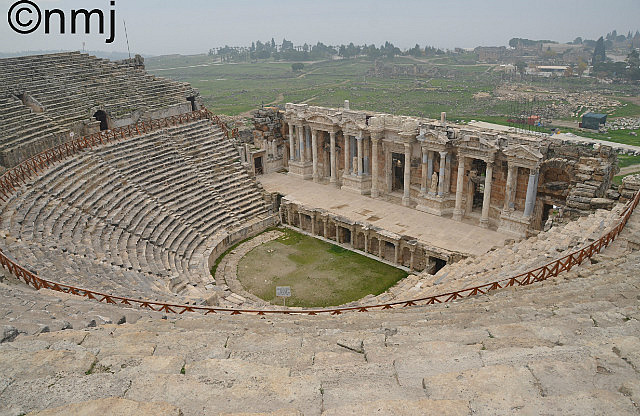
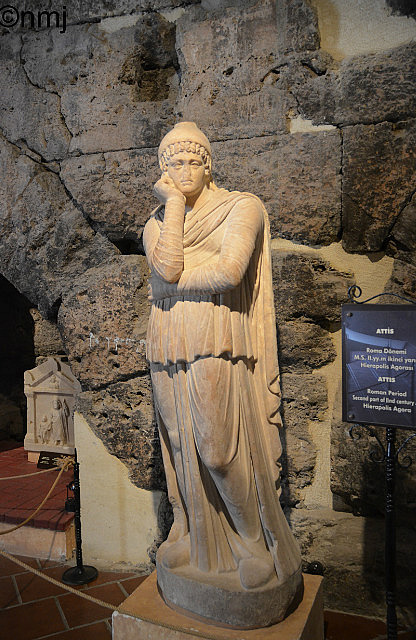
Hierapolis was originally founded as a place of healing, probably because of the thermal waters there, but it has been occupied by the Greeks, the Romans, Byzantines (I think that is pre-Ottoman). I can state with confidence that neither the Persians or Hittites occupied the site! So, you get the picture? Yes, it’s been around for a while! However, the city grew around early temples until it became a city. There are strong early-Christian connections there with Paul having founded a church there and the apostle Phillip was martyred there and there is a Martyrium over his alleged grave. Under Byzantine rule, it became a strong Christian centre and from a modern point of view, did a lot of damage to the already existing buildings. You know the sort of thing – these temples are to honour heathens, so we will pull them down or turn them into a church. However, as the area seems to be rife with earthquakes, the city eventually collapsed and was covered with a thick layer of limestone.
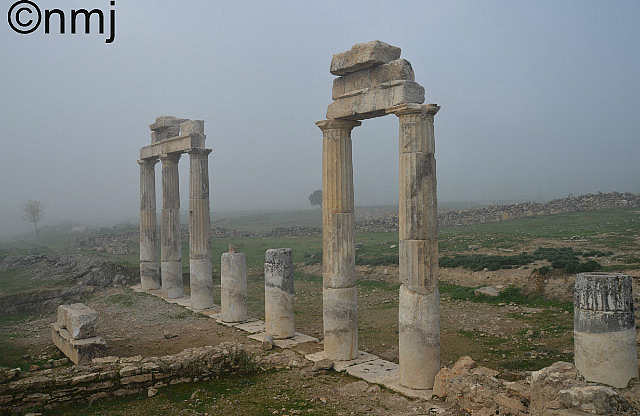
As people still visited the thermal waters, gradually the remains were rediscovered and today, after removing layers of limestone, you can walk along the main street, past the remains of houses, temples, fountains, baths, statues, through the gates at the northern and southern end of the main street, and even through the old Necropolis where there are the remains of many old tombs.
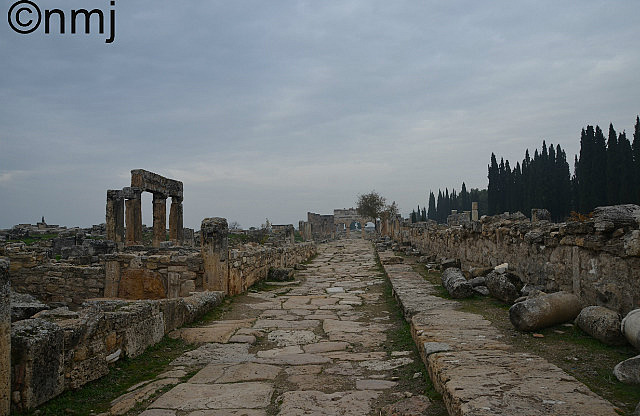
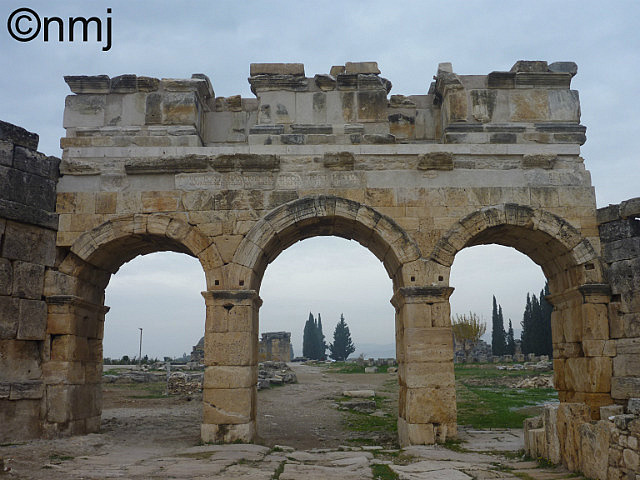
It is incredible when you read guide books about a place and they say that a visit to this location will take 2 hours – we managed to spend almost 5 hours walking around Hierapolis and still didn’t see everything! It was a great day – weather was friendly, not too many crowds and so much fascinating stuff to see. Nick is starting to have visions of himself as the next Tony Robinson!
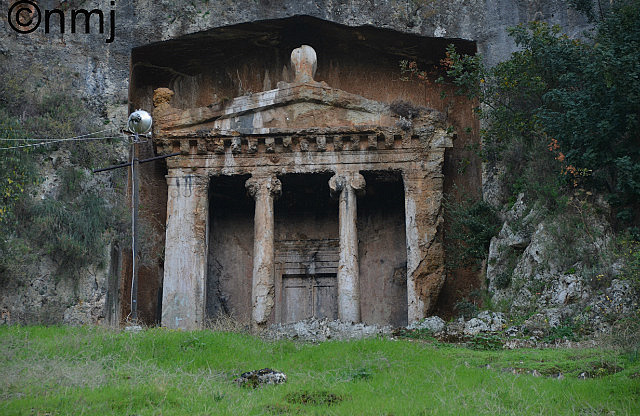
Now it was time to drive as far south as we were going in Turkey. Because we had already visited Antalya and Cappadocia last year in such bad weather, we weren’t going to risk encountering the same sort of cold weather, so we were sticking to the Aegean coast of Turkey and we headed down to a place called Fethiye, which used to be called “Telmessos” and has some of the most amazing hill-side tombs that were built for the old kings of Lycia.
We had been “chatting” with a Pom who was spending 6 months (or so) in Turkey to avoid the English winter! It turns out that we arrived on their 40th Wedding Anniversary, but they kindly invited us in for coffee and a chat, gave us lots of suggestions about motorhoming in Greece (Don has been motorhoming for many years) and even directed us to a local cafe where we could get a nice meal, instead of visiting any of the touristy-type places.
Don was staying at a place near Fethiye called Kayaköy which was a village where Anatolian Greeks lived and built their Greek-style houses but after the war between Turkey & Greece, which was after WW1, the village was abandoned because the Greeks were driven out of Turkey. For a short while, it was home for the Muslims who had been driven out of Greece, but they weren’t farmers and they also didn’t stay in the village. As a result, the place looks like a ghost town, which was quite eerie when we were walking through it to find the restaurant for dinner that night. No street lights, a dark night and every time you looked in one direction, all you could see was the outline of abandoned houses that were in various stages of collapse.
Heading back north,our next temple to visit was the Temple of Apollo at Didim (or “Didims” as Nick was insisting on calling it!). Didyma (modern name is Didim) is south of Miletus which used to be a ancient port and was at the other end of the Sacred Way between Miletus and the Temple of Apollo. Apart from being the fourth largest Sanctuary in the Greek world, it was also the location of an Oracle who was seen as being second to the Oracle of Delphi. Yes, the temple has been the victim of earthquakes in the centuries since it was built, and because it was an important temple in the area, it received many gifts from King Croesus (heard the expression “As rich as Croesus”?), and therefore it was also raided by people like Xerxes of Persia, but then the Temple was rebuilt by Alexander the Great around 300BC. But I think that you are getting the picture and I’m having an overloaded feast of names from ancient history (sadly never studied it, just did lots of reading)!
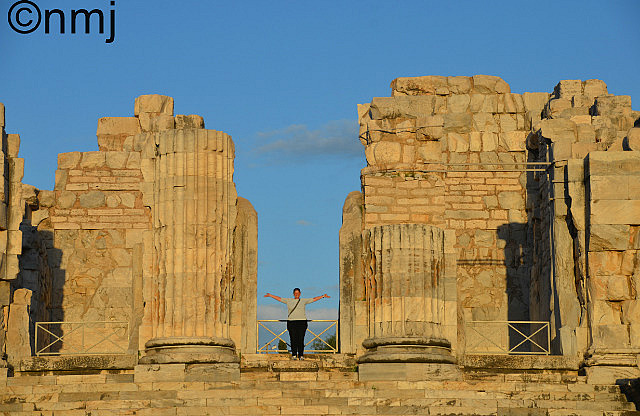
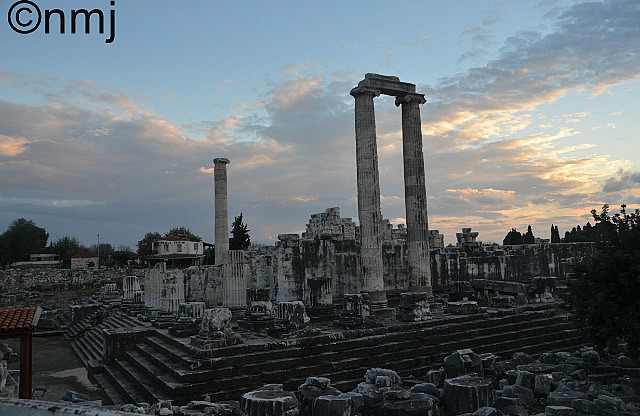
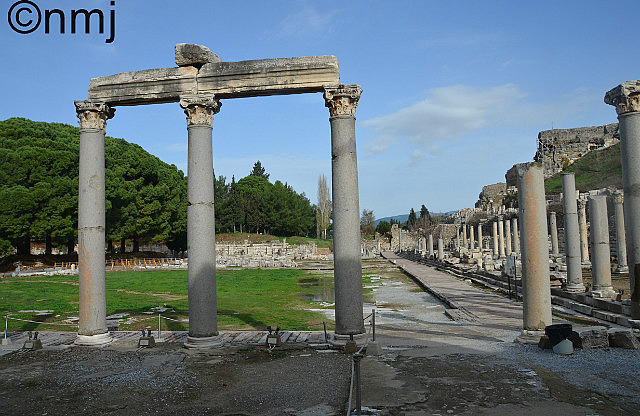
It’s an awesome experience to walk around the remains of the Temple and unlike in Greece, you can walk through the Temple to see as much as is possible. We were in awe of the craftsmen who had been responsible for the carving and building work, the intricacy of the carving and just the sheer magnitude of building such a huge structure with the limited materials that were available to them in those days.
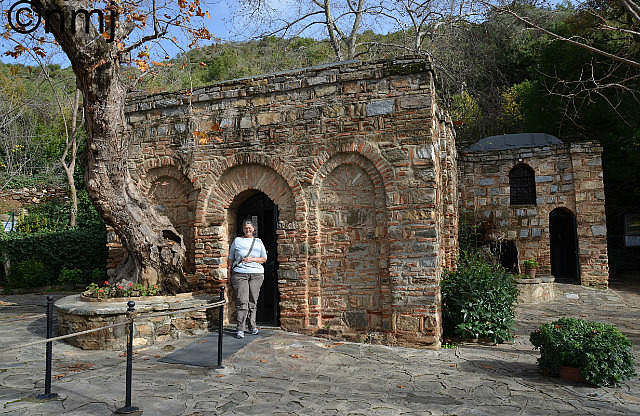
From Didim, we were heading to Selçuk, which is home to an amazing array of ancient Greek & Roman ruins, as well as being an important centre in early Christian history. According to history, after the Crucifixion, Mary was “adopted” by one of the apostles, John the Younger,
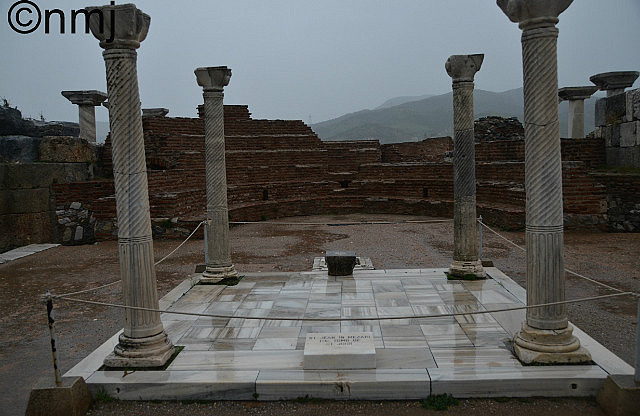
author of the Gospel and the Book of Revelations. Whilst it is recorded that John went to Asia, it is believed that Mary went with him to Ephesus. There is a house about 7kms south of Selçuk (House of the Virgin Mary), which is alleged to have been where Our Lady lived the last years of her life. It is a pilgrimage destination for many Catholics, including the last 3 popes. But in Selçuk, the Basilica of St John is built over the grave of the Apostle, St John and St Paul also lived in Ephesus until he angered the followers of Artemis and was booted out! But several of the Epistles in the New Testament were either written in Ephesus (1 Corinthians) or were written to them (Epistle to the Ephesians).
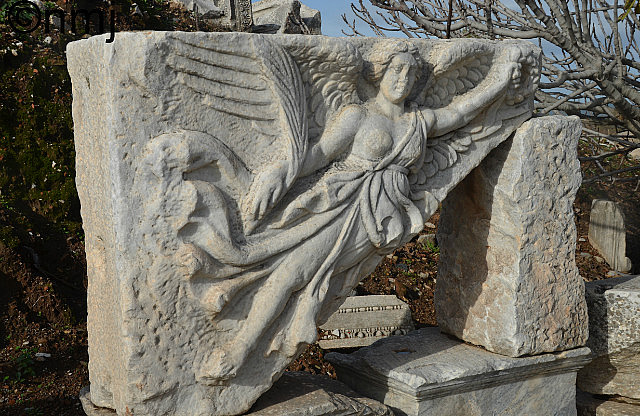
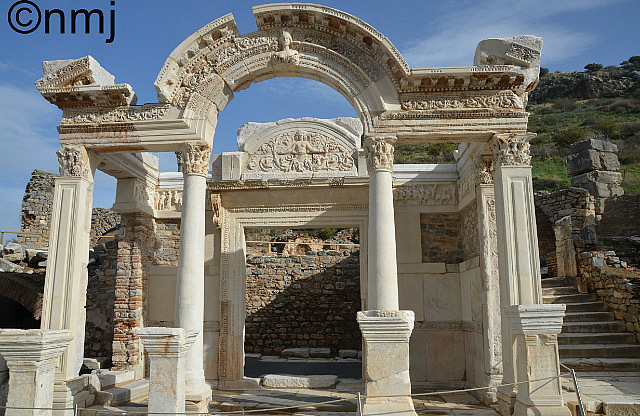
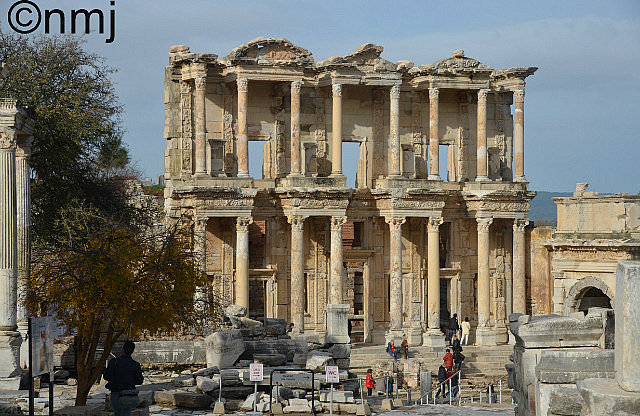
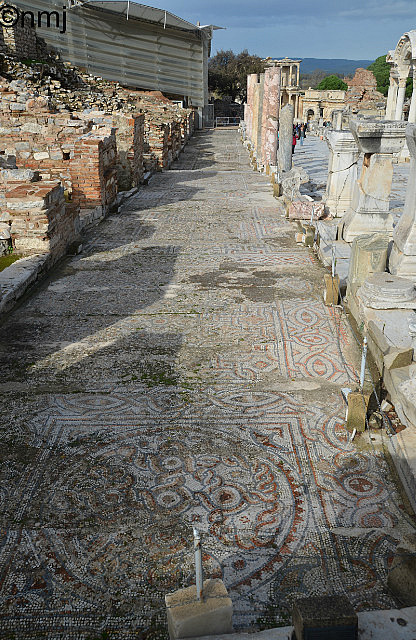
Anyway now for the good stuff – Ephesus has had a Neolithic Age and a Bronze Age, as well as an Archaic period, a Classical period, Hellenistic period, Roman period, Pyzantine era and Turkish era. So it looks like every man and his dog (and cat) has been in Ephesus, not discounting the raiders, the Cimmerians, the Lydians, the Persians, the Egyptians, plus liberations by Greeks and Romans, etc, etc, etc.
We spent a day in Ephesus walking around, feeling very inconsequential, but for a price. Yes, it costs to visit Ephesus, but it was only 30 Turkish Lira, which is about 10 Euro or A$15 per person. However, just behind the Basilica of St John is the Temple of Artemis, which is one of two remaining Seven Wonders of the Ancient World (The Great Pyramid at Giza is the other remaining Wonder). Sadly, there is very little to see at the Temple site and what is there is only visible due to the efforts of Archeologists, but as there is so little there, it was free!
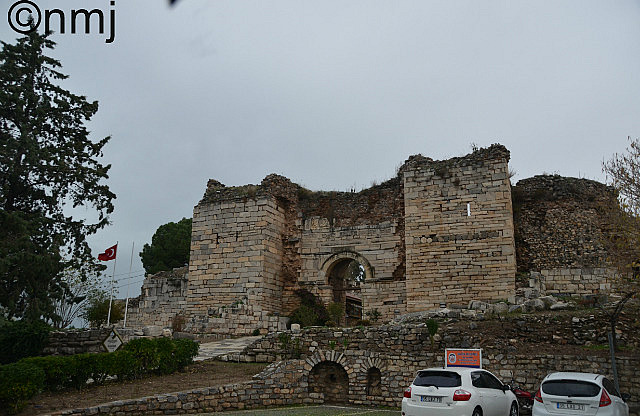
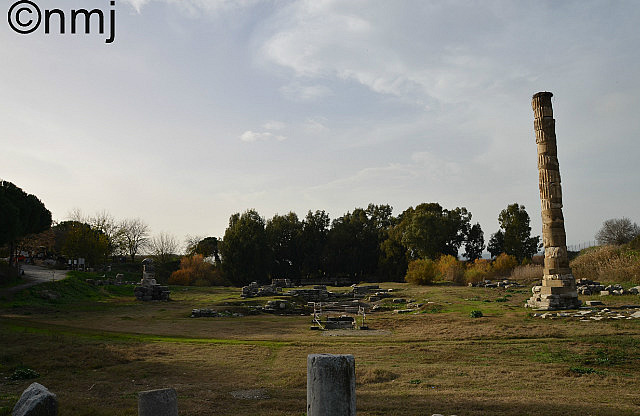
This is one of two remaining Seven Wonders of the Ancient World
On our first afternoon in Selçuk, Nick was suddenly “Look!” and was very excited!! He had seen an Australian-registered (WA plates) Troopy driving past. He was very disappointed that he didn’t see it in time to flag them down. But when we arrived in the car park at Ephesus, there it was again! Now, here is the thing – there are two car parks at Ephesus, one at each end of the old city, so if we had parked at the other end, we wouldn’t have seen the Troopy again! But Nick left our card on the car, telling them where we were staying and in the afternoon, whilst we were trying to fill Oscar with fresh water, the Troopy drove into the campground. It was being driving by a pair of Dutchies (Izaak & Anje) on their back home to the Netherlands.
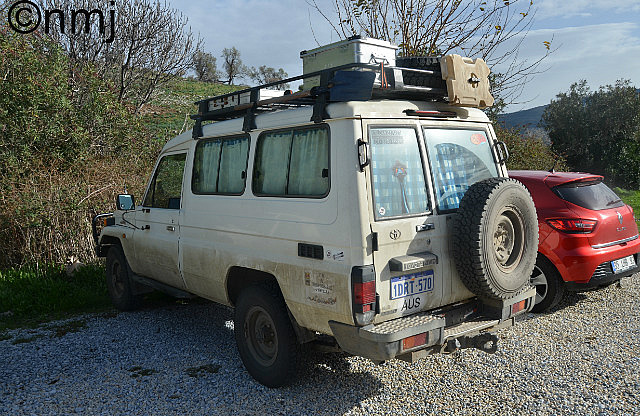
They had been living in Australia for a couple of years and had turned their return home into an adventure by driving through Indonesia, Malaysia, Thailand, Burma, India, Pakistan, Iran, Turkey and onwards through Europe. Izaak was bemoaning the fact that he had lost his Akuba hat so MJ was happy to offer him her hat, which he took with great delight.
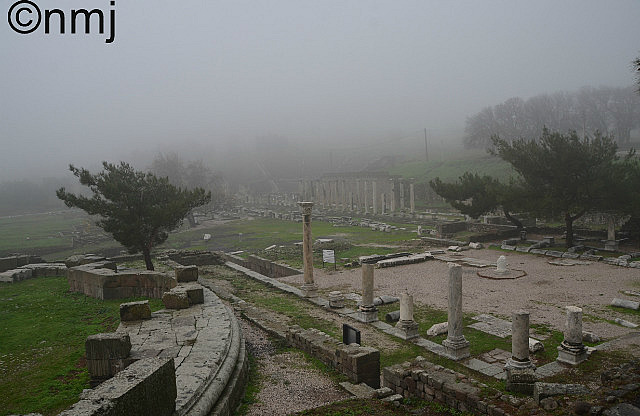
Last year, on one of our many visits to Berlin, we spent an afternoon exploring the Pergamon Museum. The Pergamon Museum was purpose-built to provide a home to the Pergamon Altar which was brought to Berlin from Turkey. After visiting the Museum and seeing the Altar, we had always said that if we ever had the chance, we would love to see where it came from. People we spoke to said that there wasn’t anything there worth seeing anymore and we would be disappointed, but we persisted and on a very cold day, we visited the ancient city of Pergamon, which is near Bergama. After paying “How much?” (in a shocked voice) to park Oscar, we bought a one-way ticket on the cable car up the mountain to Pergamon (we’ll walk downhill) and then we had to buy our entry ticket into the Archaeological site. But we had fun exploring the site, the Temple to Emperer Trajan, the Sanctuary of Athena, the Theatre, as well as walking all around the area, and finding the exact spot where the Great Altar used to be, having a discussion about what went where. but, were we disappointed? Not one bit! We did have a tiny score though – after paying for parking, entry and the cable car, we managed to score a free ride down the mountain – well, it was raining and cold, and too miserable to walk down the mountain.
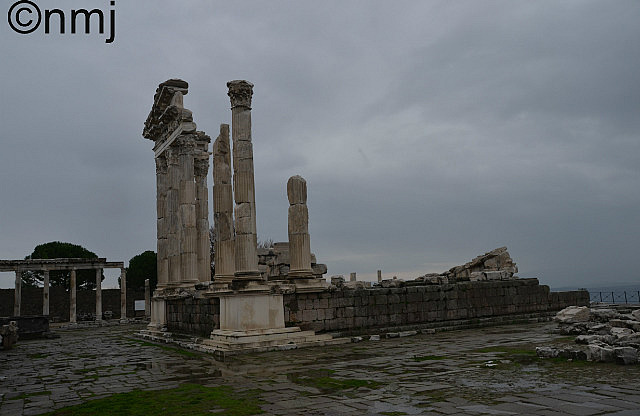
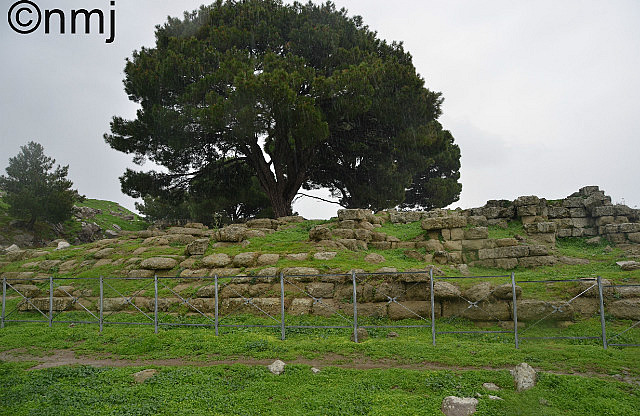
And now we only have two more places on our wish list of places to see in Turkey – Troy and Gallipoli. Again, we were warned that there wasn’t anything to see in Troy and we would be disappointed, but having reading the Illiad and the Odyssey (that would be MJ not Nick), how could we be so close to Troy and not go there. Yes, there isn’t a lot to see, by as you walk around the old city, you can see that Troy has been rebuilt ten times in it’s 4000 years of history and in the Troy VII level (1250BC), there is evidence of widespread destruction by fire, which has been linked to the destruction of Troy at the end of the Trojan War when it was set on fire by the Greeks when they came out of hiding in the Wooden Horse. And, of course, there is a huge wooden horse that you can climb up into for the obligatory photo opportunity. But we’re happy that we did visit Troy because you could see the sort of stuff that archaeologists try to learn when they excavate a place. One example is a wall from a dwelling that has been preserved and then to walk along a laneway, knowing that it was built thousands of years ago!
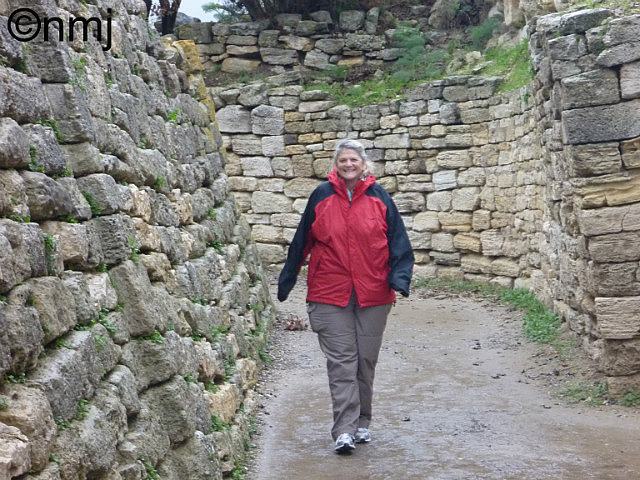
in Troy
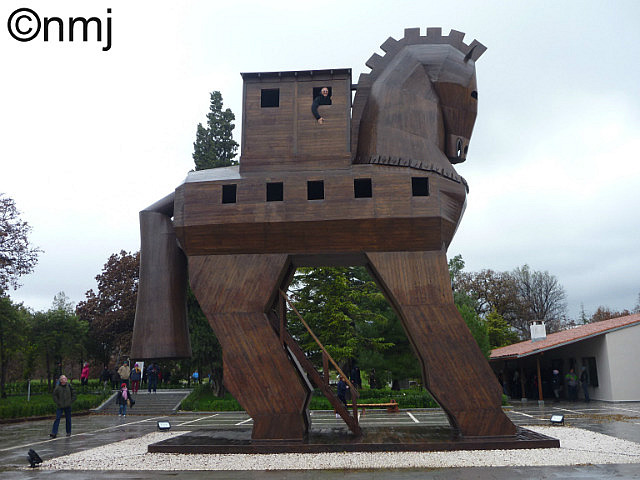
Obligatory photo opportunity at Troy!
And so now it is time to catch a ferry across the Dardanelles, and see some history that is a little bit closer to our own time. Whilst it would have been a huge buzz to visit Gallipoli for Anzac Day, I’m afraid that neither of us could have tolerated the crowds that are here at that time, so we enjoyed visiting in November and we have to say that we were very impressed with the number of Turks who were visiting the location. At times, we were wondering if some of the buses were loads of new conscripts on an introductory tour.
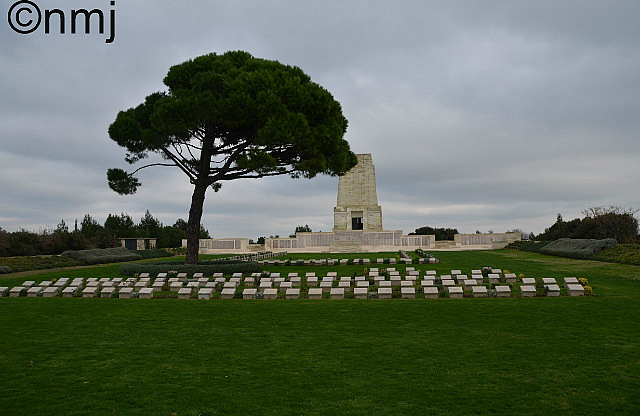
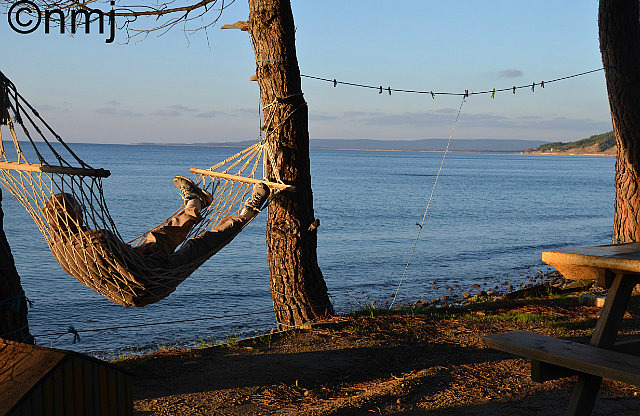
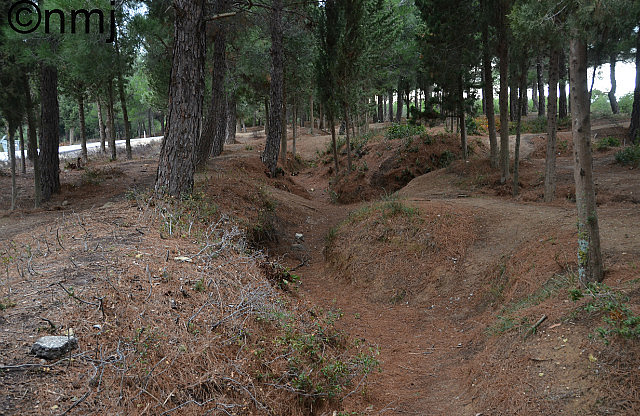
Day One in Gallipoli was spent visit Anzac Cove, Lone Pine, the NZ Memorial and the Museum before we managed to find a place to camp. We were looking at a car park but then after talking to the caretaker, we were allowed to camp in the closed campground across the road. It turns out that the campground is located on Brighton Beach, which was where the Australians were supposed to land. It’s a shame that they landed at the wrong spot, but if they had landed at Brighton Beach, there was more flat stuff before the hills began, which would have made it easier for the landing parties, or at least that’s what my personal military advisor told me!

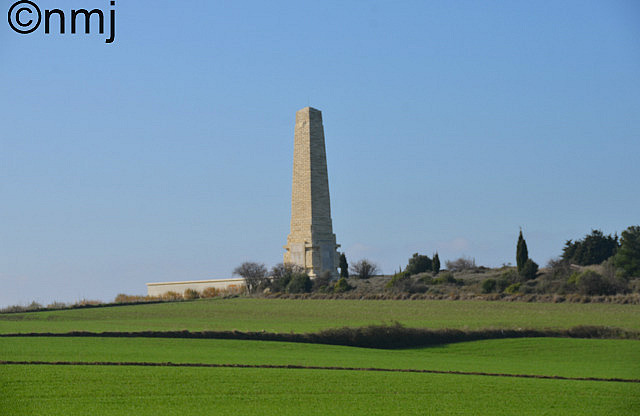
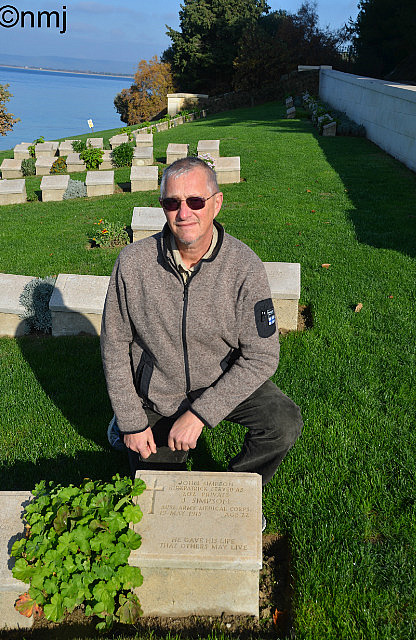
On Day Two, we went down to Cape Hellas where the Brits landed and we also went back to Anzac Cove to find Simpson’s grave. When walking around a military cemetery, especially a WWI cemetery, take a moment to read the headstones and you will see some interesting headstones.
Many headstones had some very typical quotations, “He gave his life that others might live” and that sort of thing, but then we encountered one that simply said “Well Done Ted”. We also found a Staff Sgt-Major with a Service number of “7”!
Whilst my grandfather fought in North Africa both World Wars, I am truly grateful that he made it home safely from WWI because, if he hadn’t, then my mother wouldn’t have been born, and ergo, I wouldn’t be here either! Having said that, we are grateful for the sacrifice made by so many young men from Australia & New Zealand.


the Younger
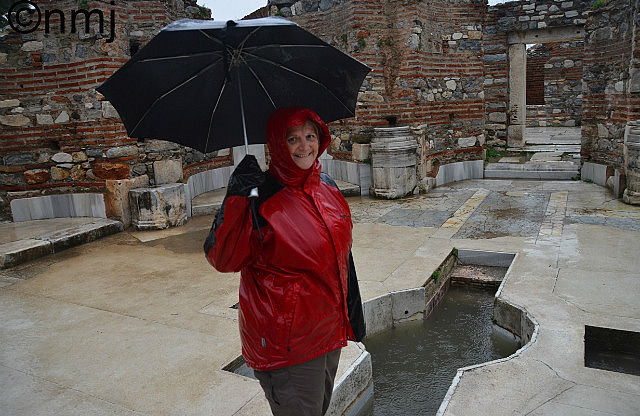


Brighton Beach, Gallipoli
 Nick & MJ On The Road
Leave a comment