In an effort to avoid all world-class sporting events, we are heading to Bordeaux and the Dordogne Region. But it was too far to try to do in one leg so we used an App “Park4night” to find an Aires du Camping which wouldn’t cost too much. We looked around Poitiers and found a spot just to the south, called Château Larcher, that would cost us a whole 7€ for the night.
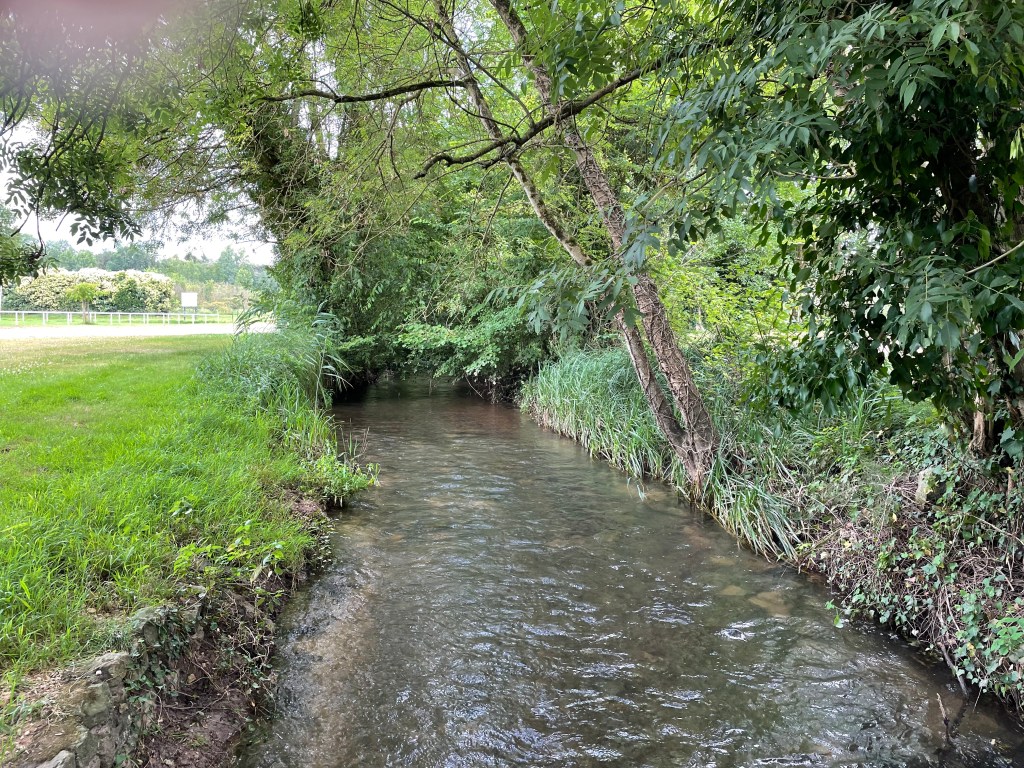
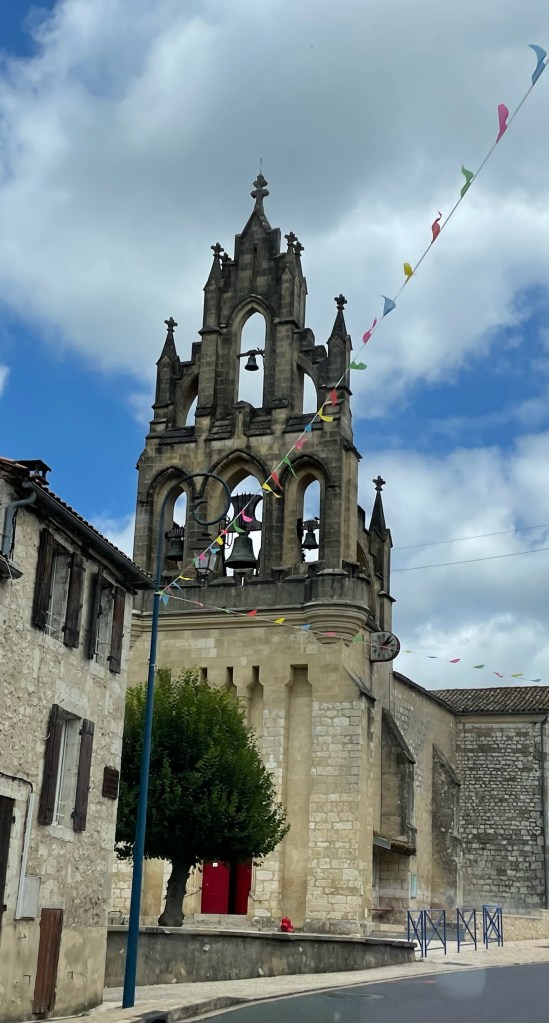
It was a small parking area, next to a sports field, that was clearly signed for “Camping Cars seulement” (Only Motorhomes) and had lovely green fields and forest around it and there was a lovely small village that had been built up around the old Château, which is now in ruins. So far, we have found this App to be very useful for finding somewhere to park for the night. You can choose and full Campground (a Caravan Park to Australians) or an Aires which can cost anything from a couple of Euros to 25€, and can be just a spot to park the WoMo or can run to toilets, power and even showers.
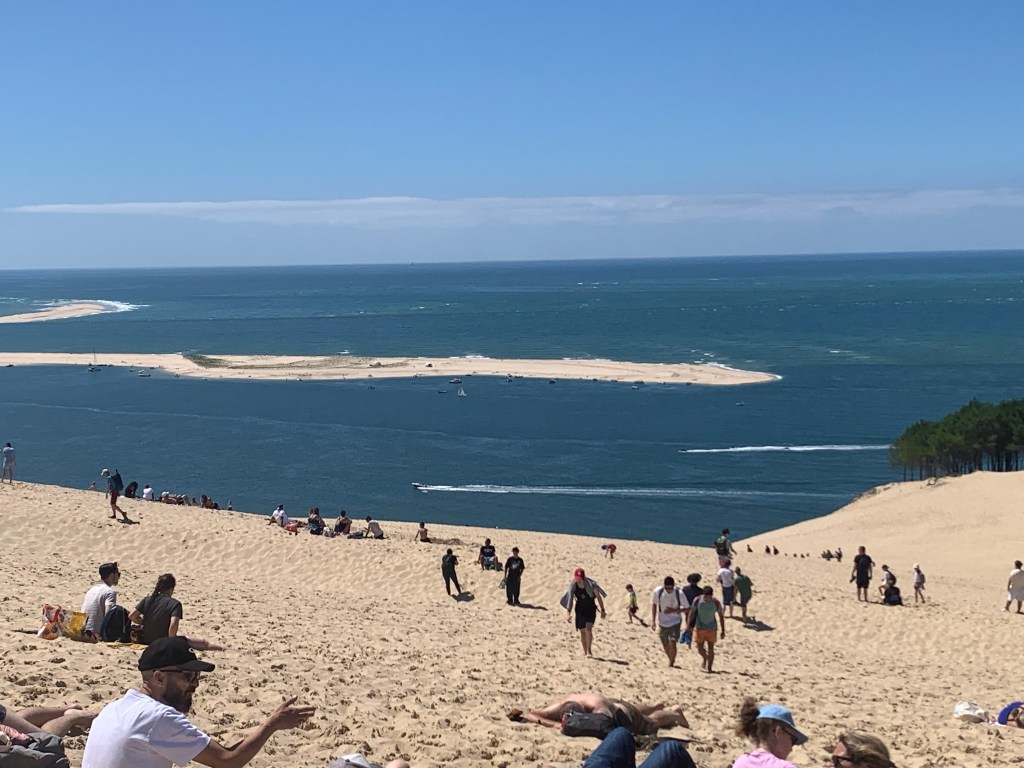
The next day, we continued south towards Bordeaux. Nick met some French people when he went to South America in 2017 and so we decided to see if they were up for visitors. They lived between Bordeaux and Arcachon, so of course we had to make a side-trip to see Le Dune du Pilat, which is the largest sand dune in Europe. It was pretty amazing but absolute hell to climb up on a hot afternoon, with hundreds of other tourists doing extracting the same thing!! But, despite her knees and hip, we made it to the top and were rewarded with some amazing views – as well as another geocache for MJ!
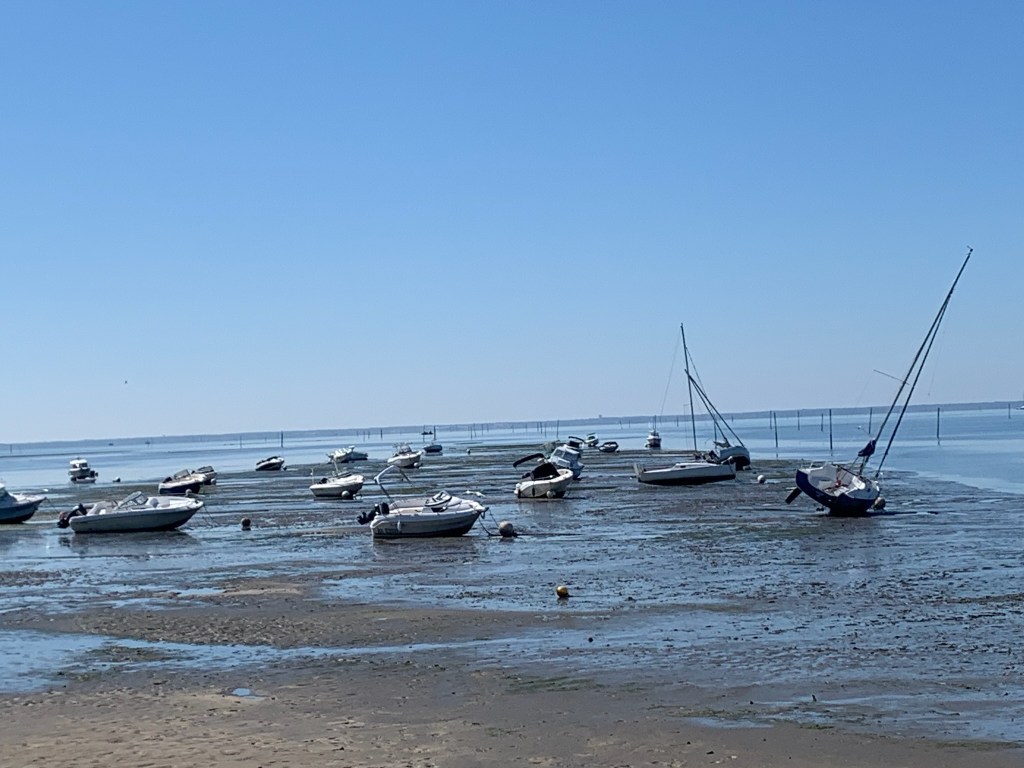
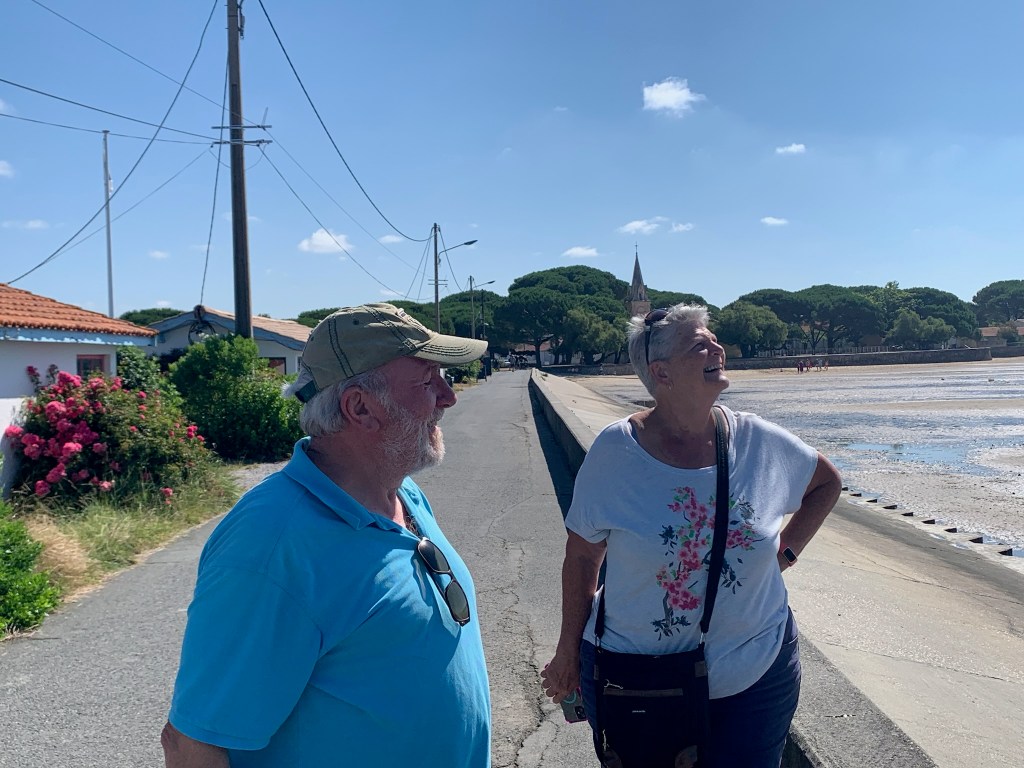
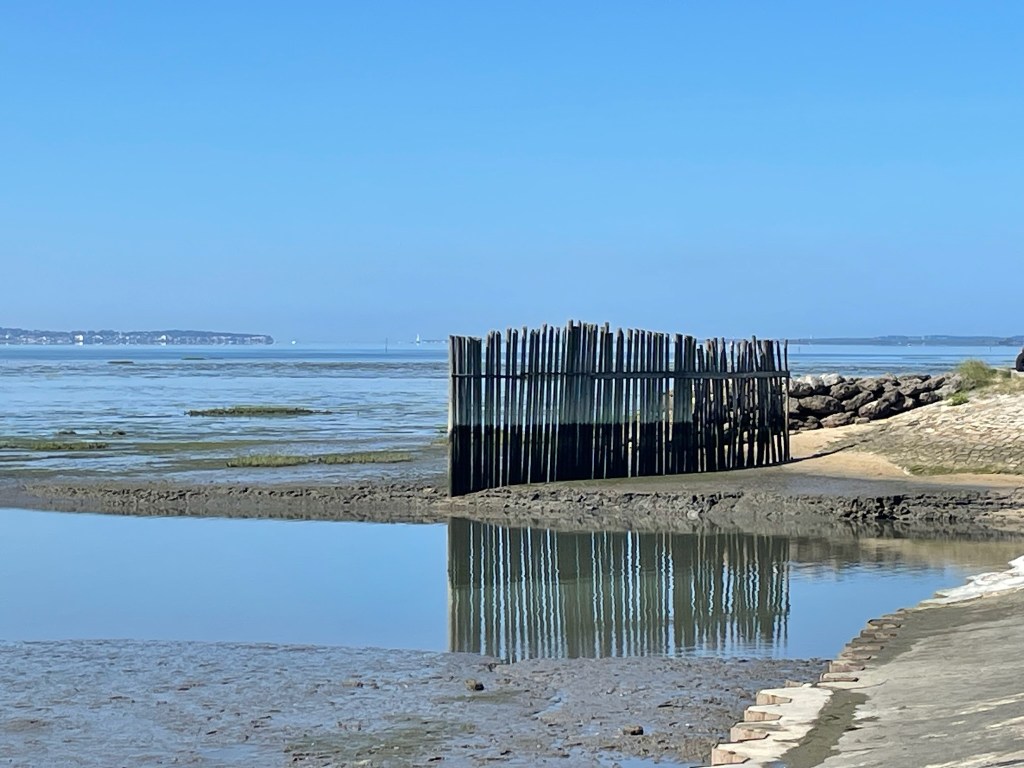
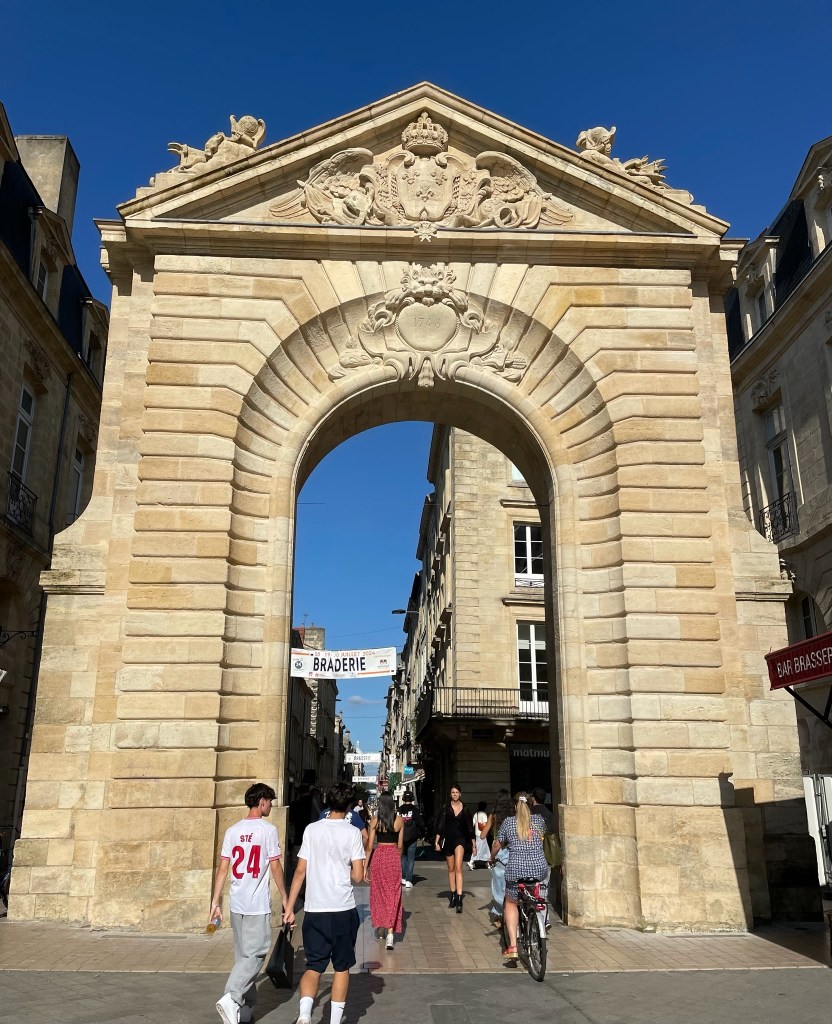
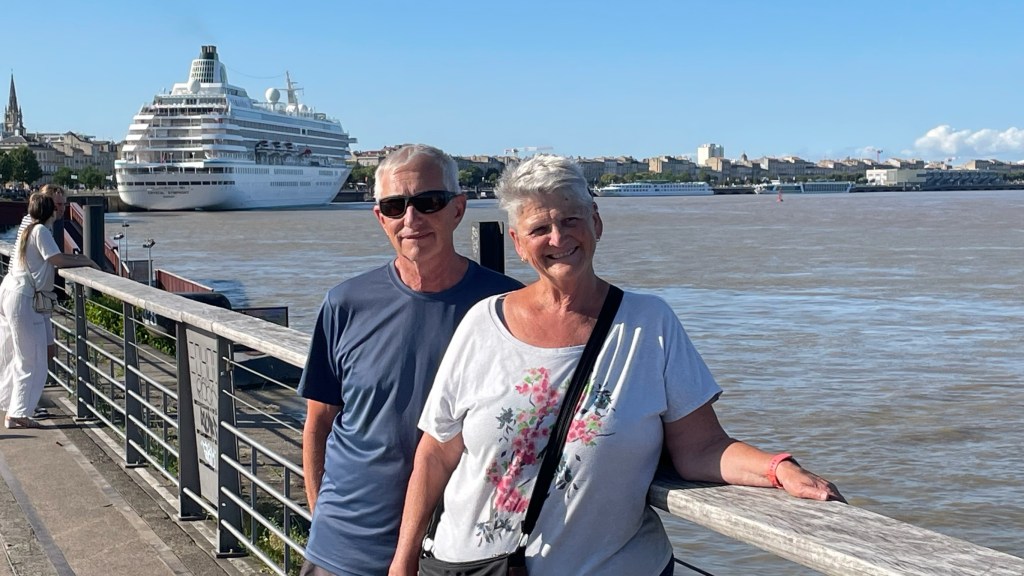
Michel & Patti invited us to stay with them for a few nights. It was a treat to sleep in a real bed for a couple of nights. Michel played Host beautifully and took us to see the old town in Bordeaux and he also took us to see Andernos-les-Bains, which seems to be the Oyster capital of France!

While staying with them, Patti fed us like kings – fois gras, canard, amazing cheeses and an ongoing selection of wine and Digestifs! And let us not forget the traditional baguettes and fantastic coffee for breakfast! That’s right – the French don’t do croissants for breakfast, they have toasted baguette with confiture (jam). The croissant and pain au chocolat is saved to have for morning coffee.
Also, we just need to make some comments about traffic around Bordeaux – it was certainly intense, the drivers were erratic and inconsiderate and downright incompetent, with no consideration for anyone but themselves, to get one car length ahead!! But mainly – incredibly slow!!
When MJ ran a French class, through U3A, in Stanthorpe, one of the ladies in the group introduced her to a book series set in the Dordogne. Apart from it being a Crime series, she really enjoyed reading about all that the area has to offer – Pre-History, History, Food, Wine and amazing scenery, so naturally this was our next stop.
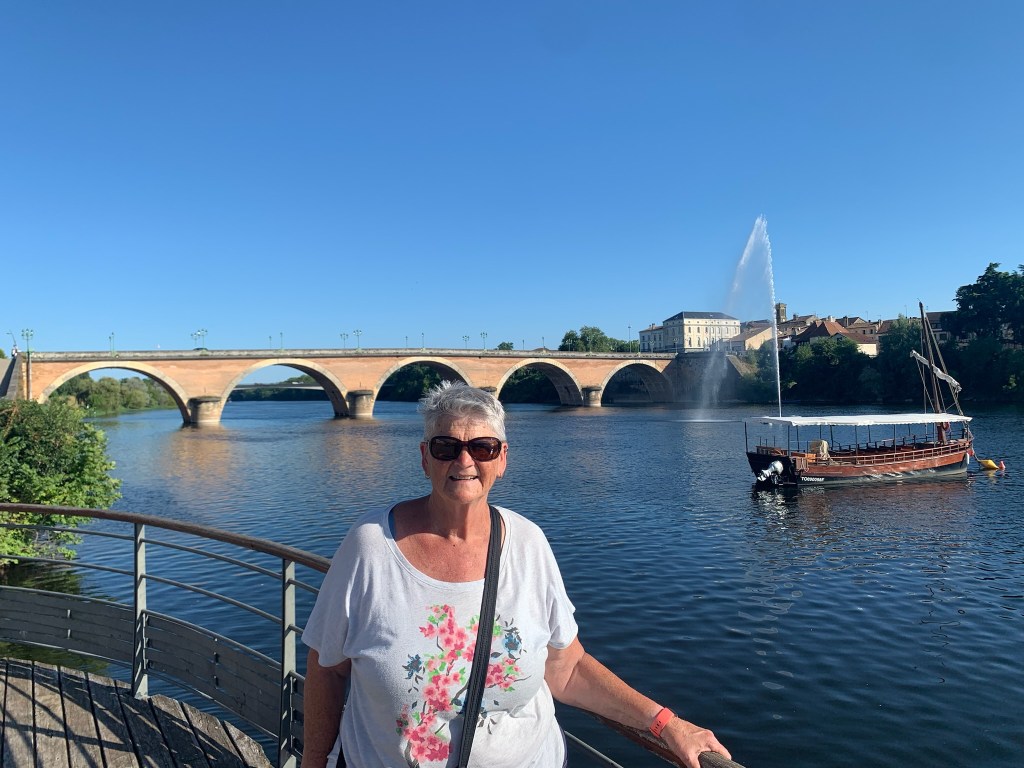
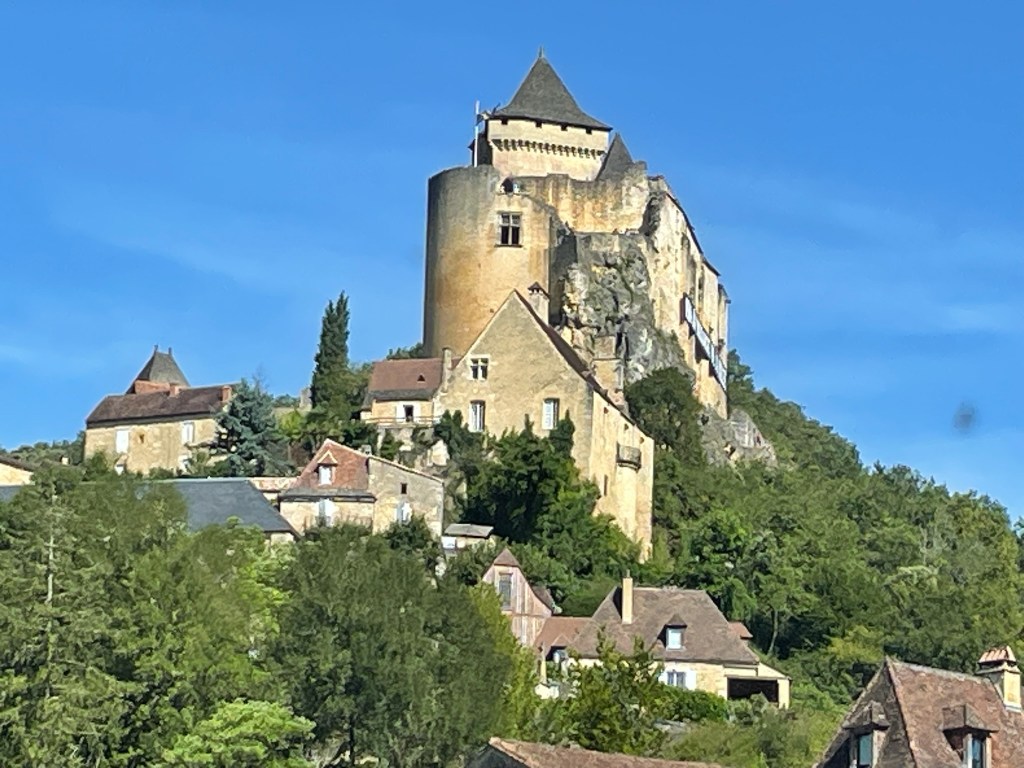
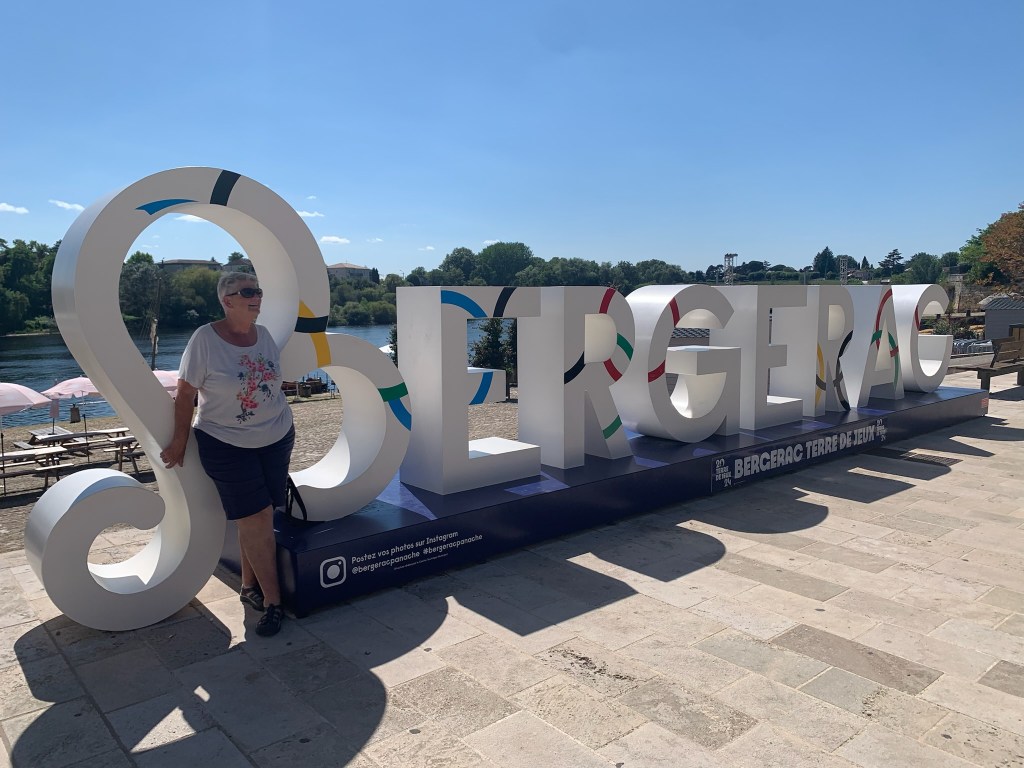
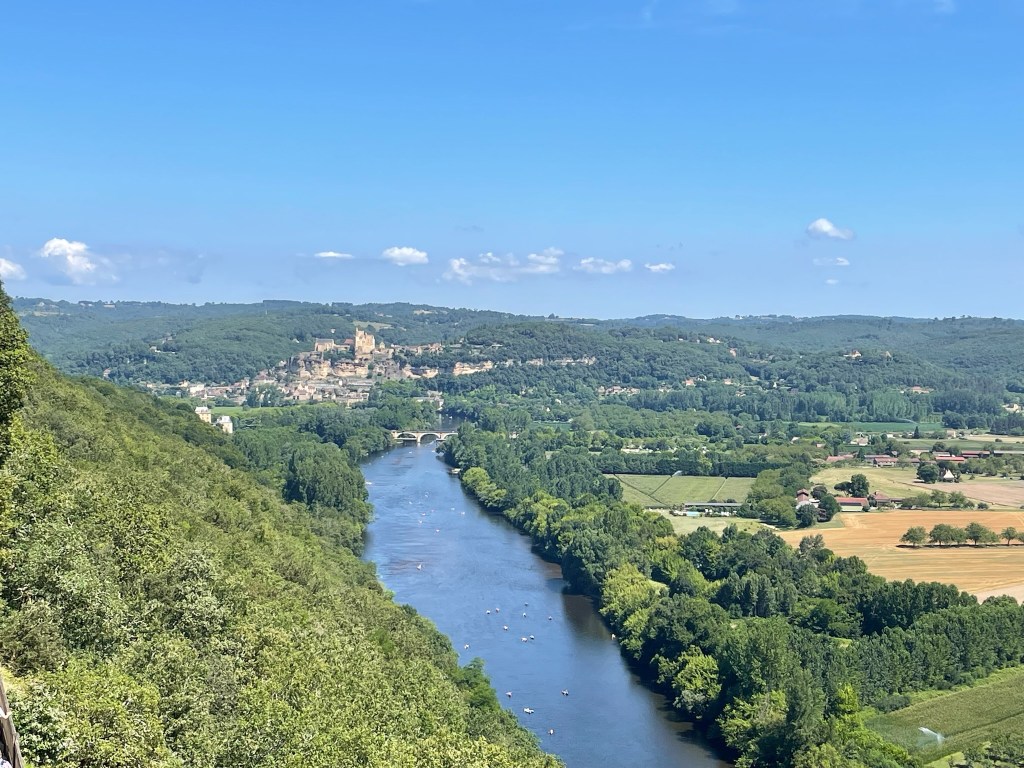
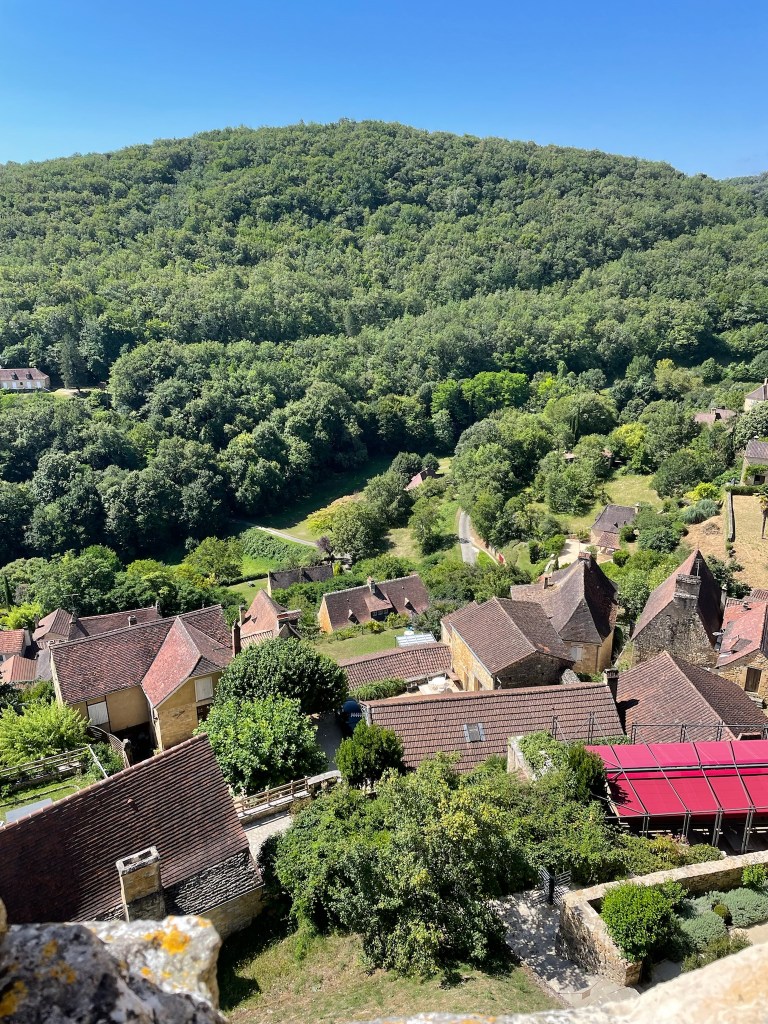
We decided that we would drive to Bergerac, spend the afternoon exploring, and then move further east into the Region. We visited Castelnaud, which is this amazing castle that was French, no English, French, English…., and continued on like this for about 300 years. These days, Castelnaud has an amazing collection of medieval weaponry, including some replica trebuchets. I might just add that this particular castle is built on the top of a hill, overlooking the Dordogne River, which means that you have to walk up hill, down hill, stagger up stairs and climb back down but the views were worth it!
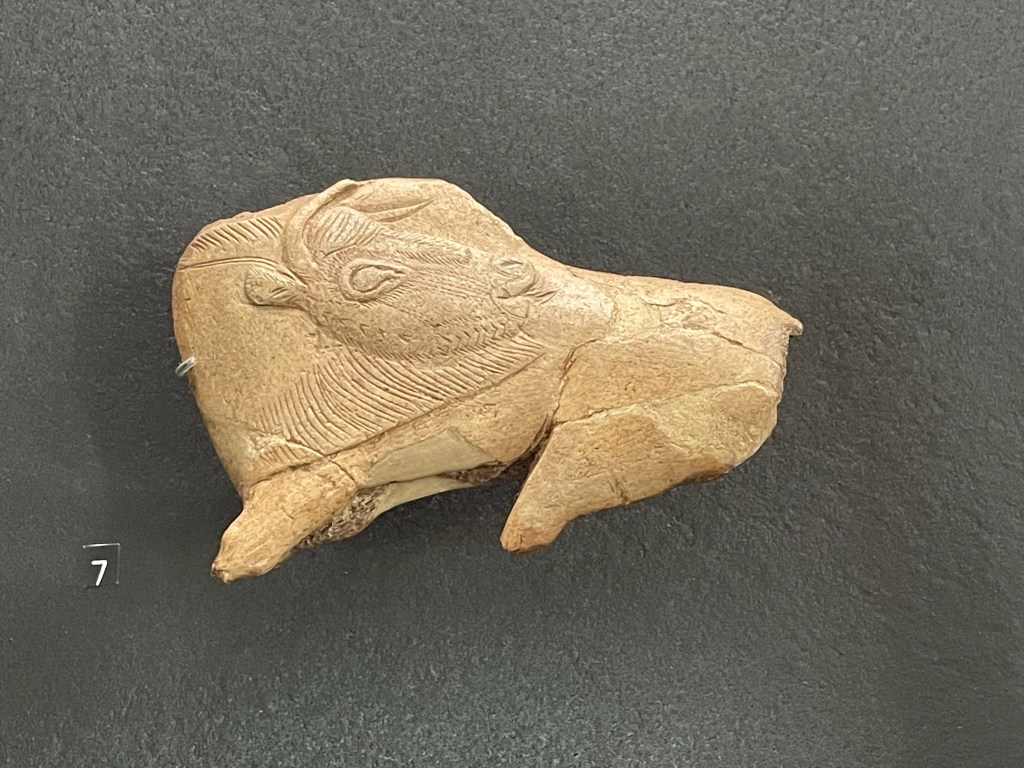
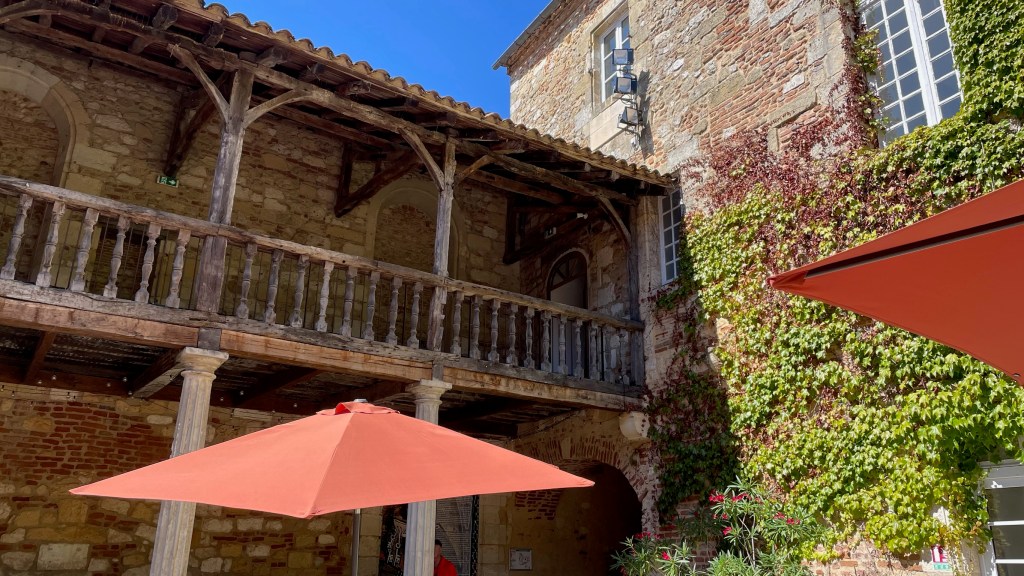
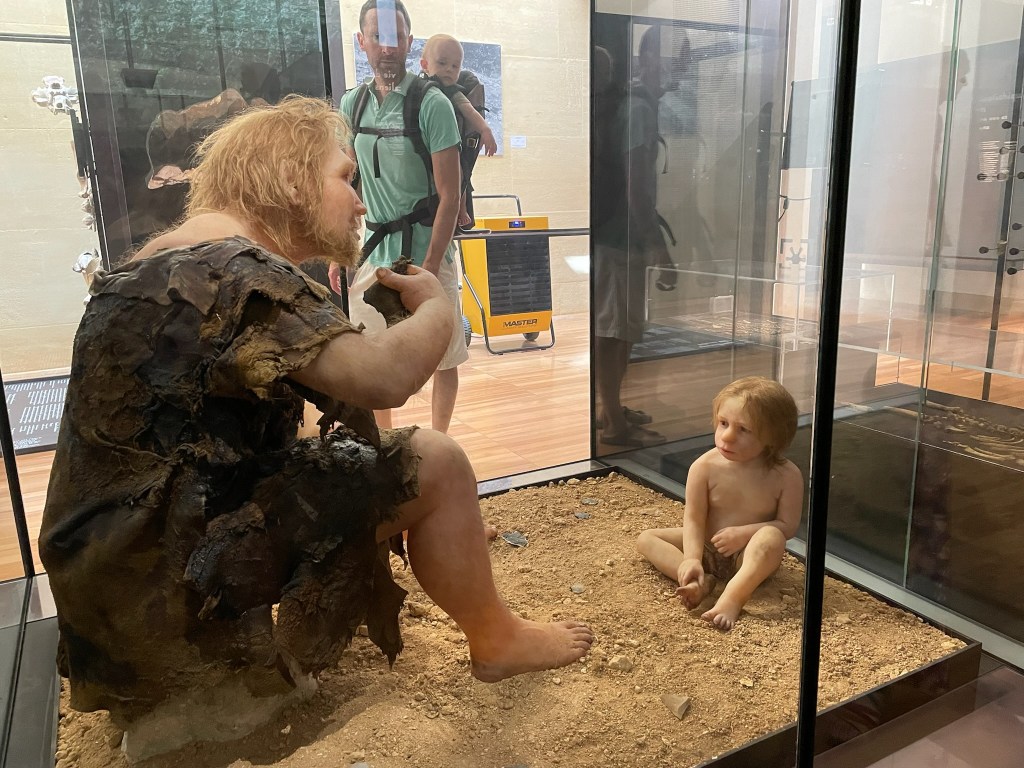
We also visit Sarlat-le-Canéda, which is another old town with lots of history around every corner, and spent a morning in Les Eyzies, which is the home to the Musée National de Préhistoire. We were lucky to arrive at the museum just as an English-language tour was starting, so we paid the extra and tagged along. It is amazing to see the development of skills, use of tools, and the gradual introduction of decoration in years that were 1000’s of years ago! Some of the primitive carving on antlers was so beautiful!
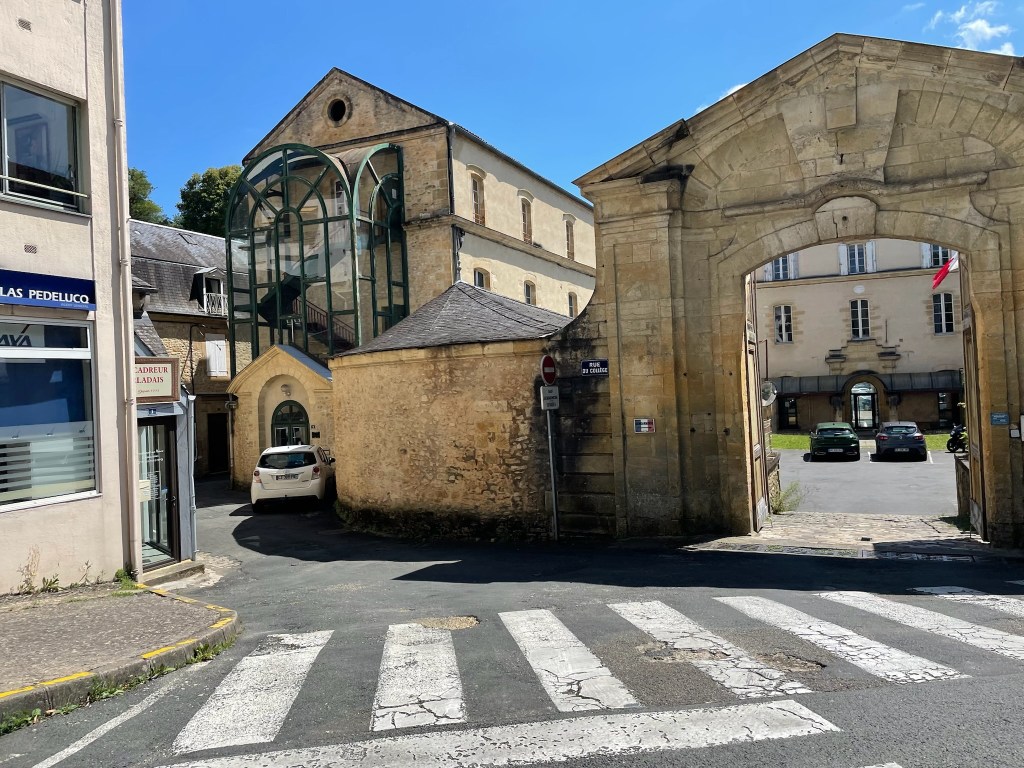
We found an interesting Aires around Sarlat, which involved taking the WoMo through some very narrow lanes until we reached a farm. It turns out that the farm makes their own Walnut Oil, which was used a lot in salad dressings, and they also make their own Vin du Noix, which is a liqueur which involves either hazelnuts or walnuts, sugar and Armignac. We sat in on a sampling of their produce, Nick was very reluctant to be there, but he stayed because I was interested! And we finished by having a Pizza which was a true Dordogne version – with Duck breast (Magret de canard), marinated walnuts, lardons of pork, and then all topped with a local cheese!
Our original plans for France included heading down to the Mediterranean coastline but we changed our minds. Why? The heat, the summer crowds, the lack of non-péage roads, the cost of camping (high season = $$$) and the Olympics – various events were going to be held in southern France and we wanted to avoid the crowds. Instead, we decided to head to Strasbourg which lies on the French-German border, and we hadn’t been there before.
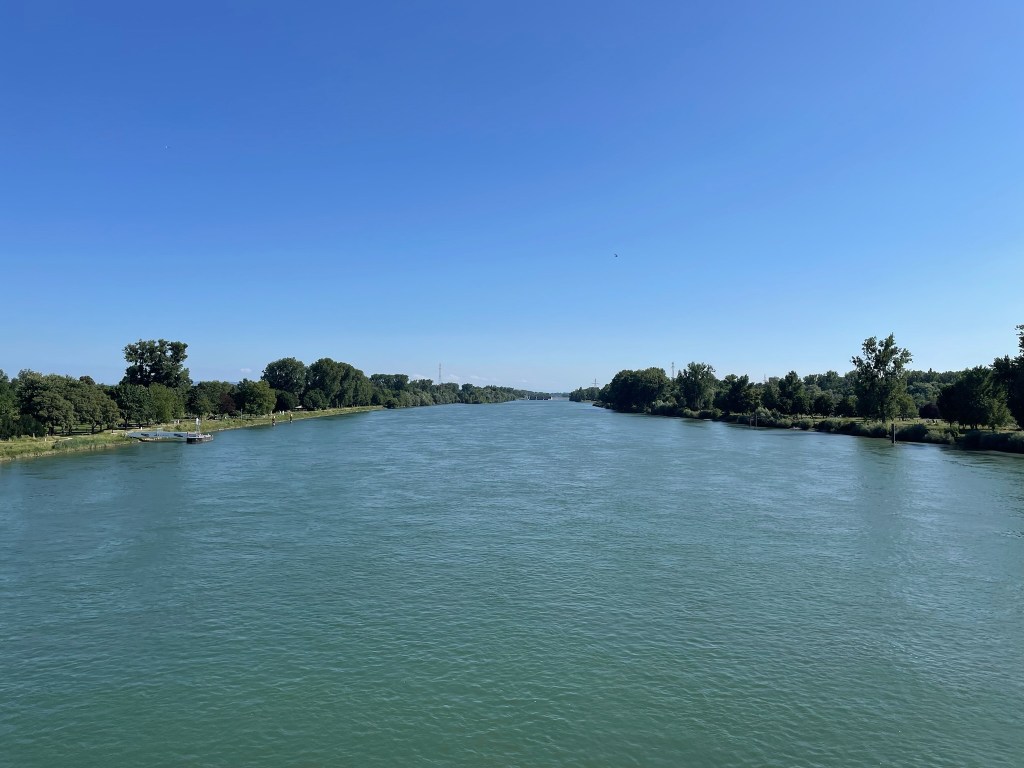
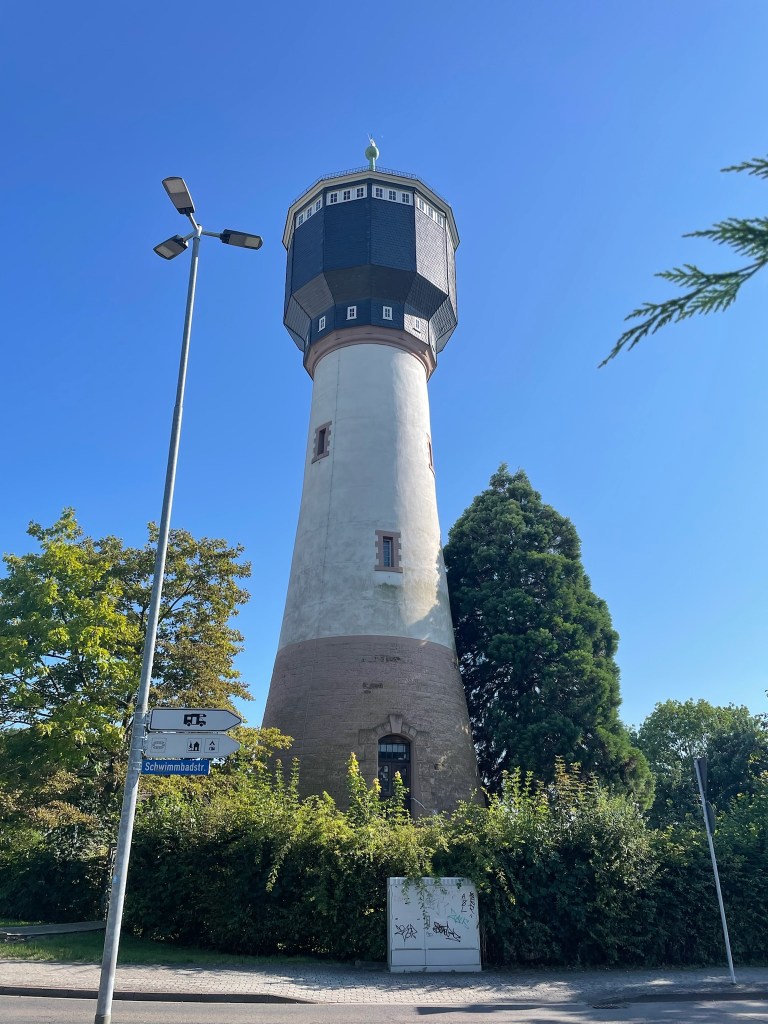
After some big kilometers and finally submitting to using the péages (our wallets are still wincing), we reached Strasbourg but there was nowhere to stay, so we slipped over the border to Zehl and stayed in a very convenient Stellplatz (German version of an Aires du Camping). The Stellplatz was only about 100m from the Rhine River, which forms the border and there was a very convenient tram that we could catch over the border into Strasbourg.
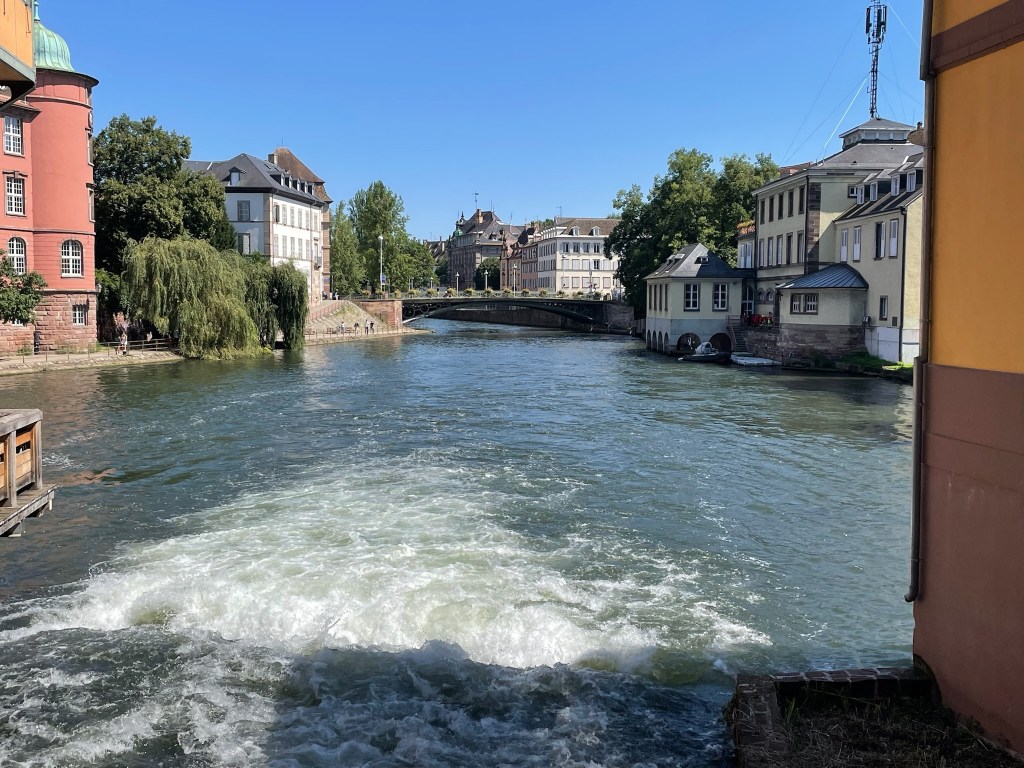
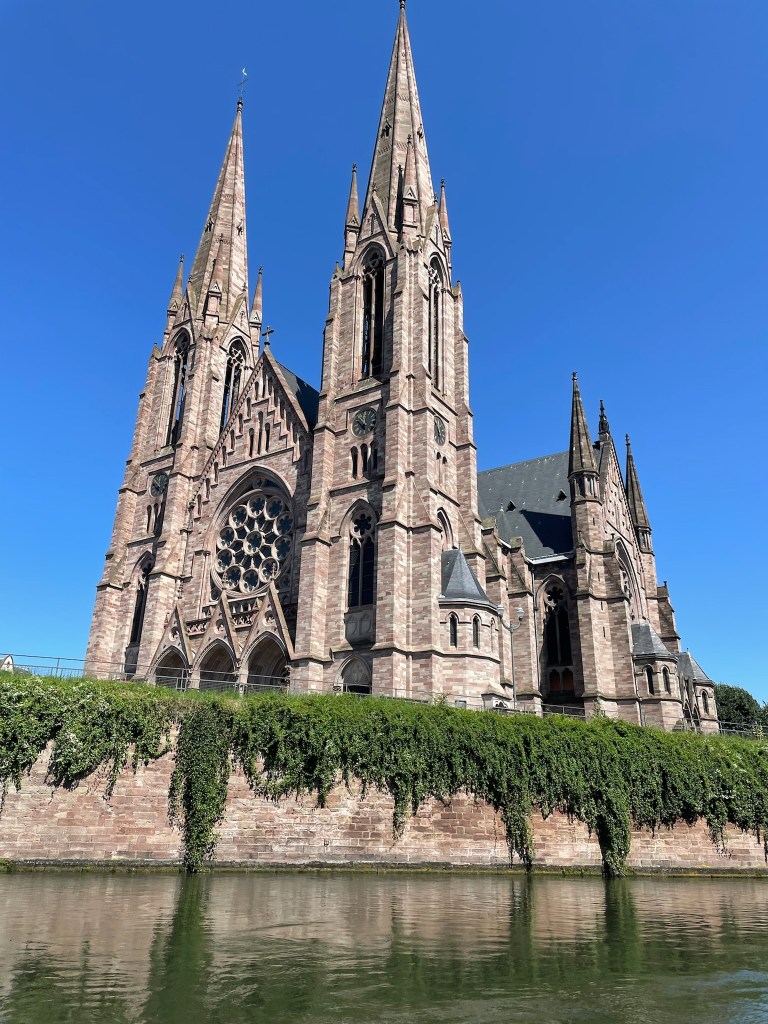
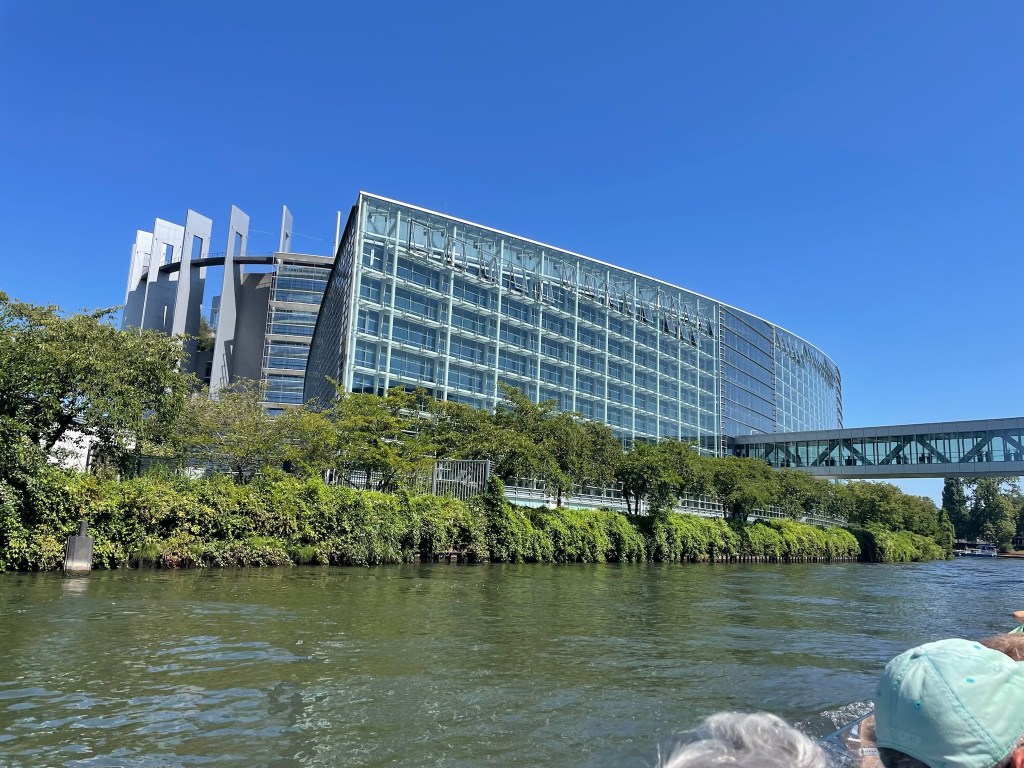
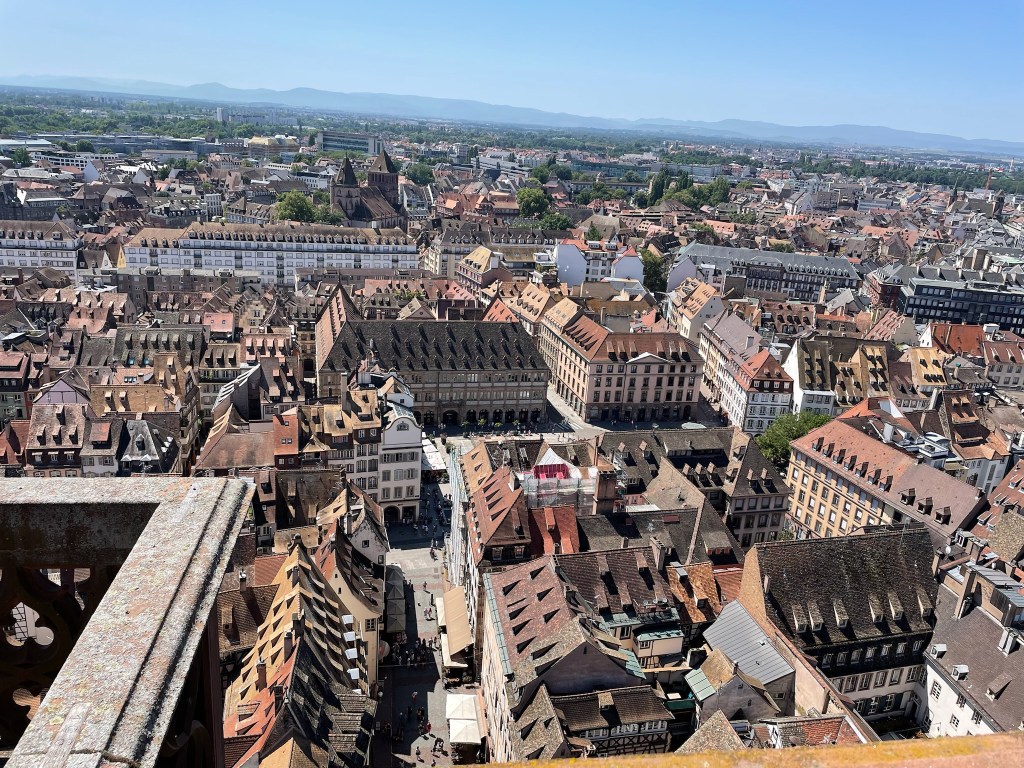
Our visit to Strasbourg involved a boat trip around the canals, climbing to the top of the unfinished spire of the Cathedral Notre-Dame-de-Strasbourg, an Alsatian meal (no dogs were involved) and lots of walking! During the Alsatian meal, Nick finally sampled Escargot but he wasn’t really a fan of them. In his words, “They were rubbery and all he could taste was butter and garlic.”. He had been hoping to sample Moules in France but always seemed to miss out – I guess that he will just have to wait until we are back in Belgium!
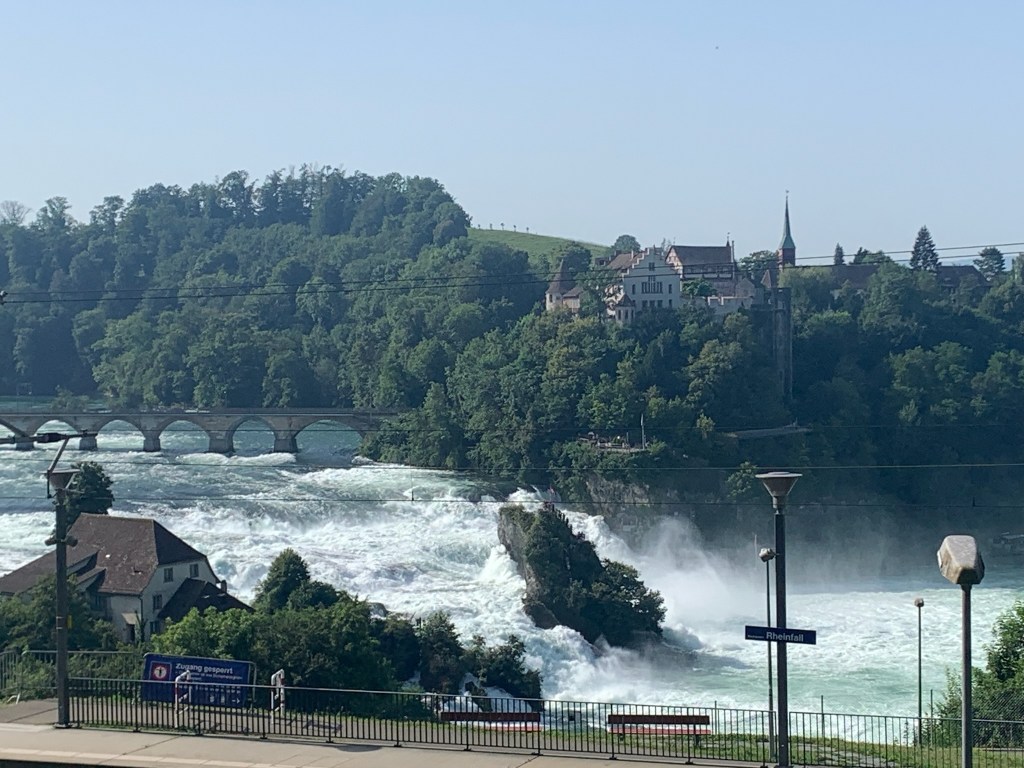
Our next country after France was to be Switzerland but our route to get there had changed. Instead of trying to avoid the dreaded péage and find a route through the Alpes that wasn’t closed due to roadworks, we had the joy of tootling down the German autobahn, which is free for cars and non-truck vehicles and we could make a detour to the RitterSport factory which is our favourite German chocolate. We overnighted in Singen, bought a Swiss Vignette (sticker to use the Motorways), stopped in Schaffhausen to look at the Rheinfels before heading down to a place called Sugiez.
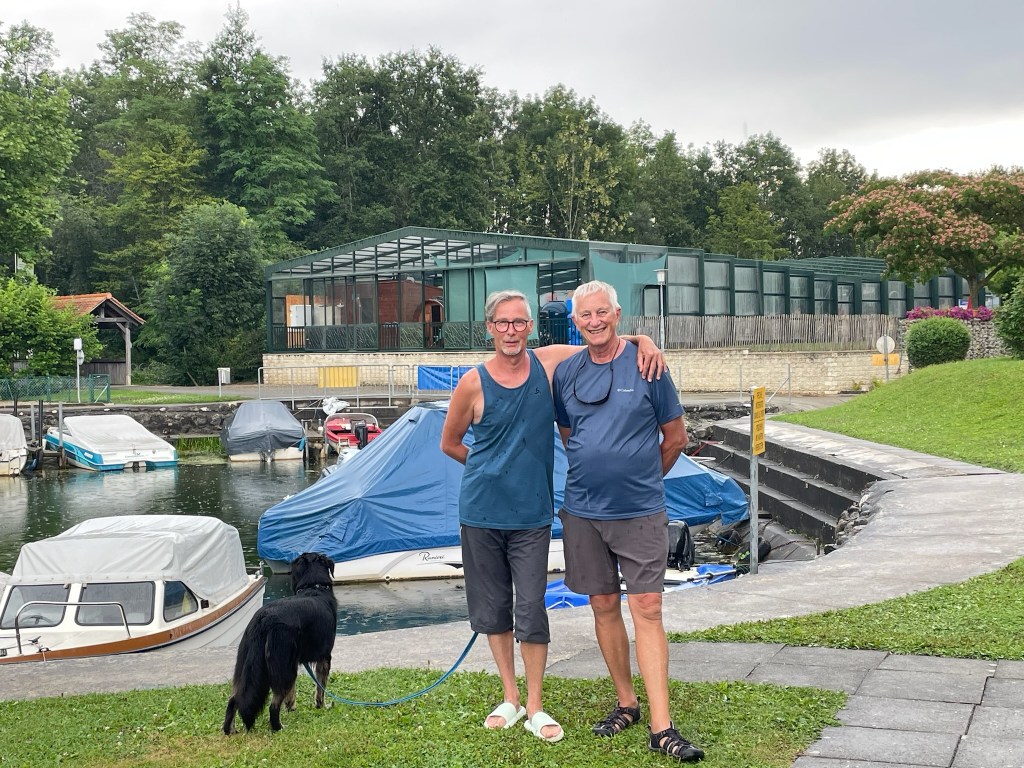
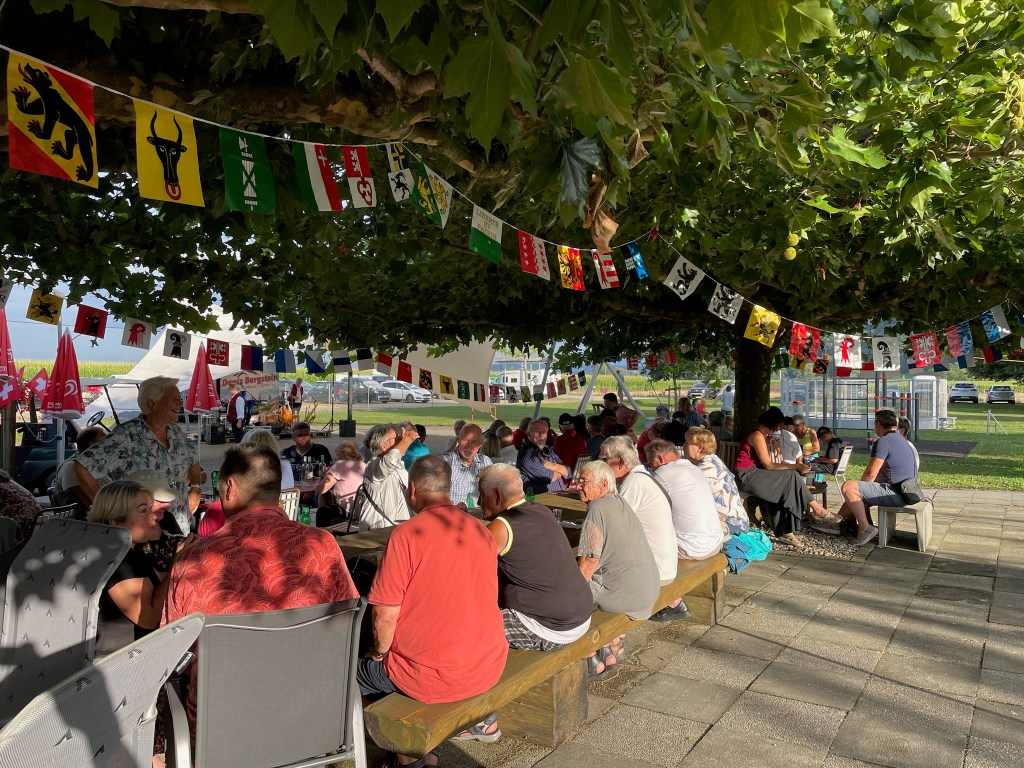
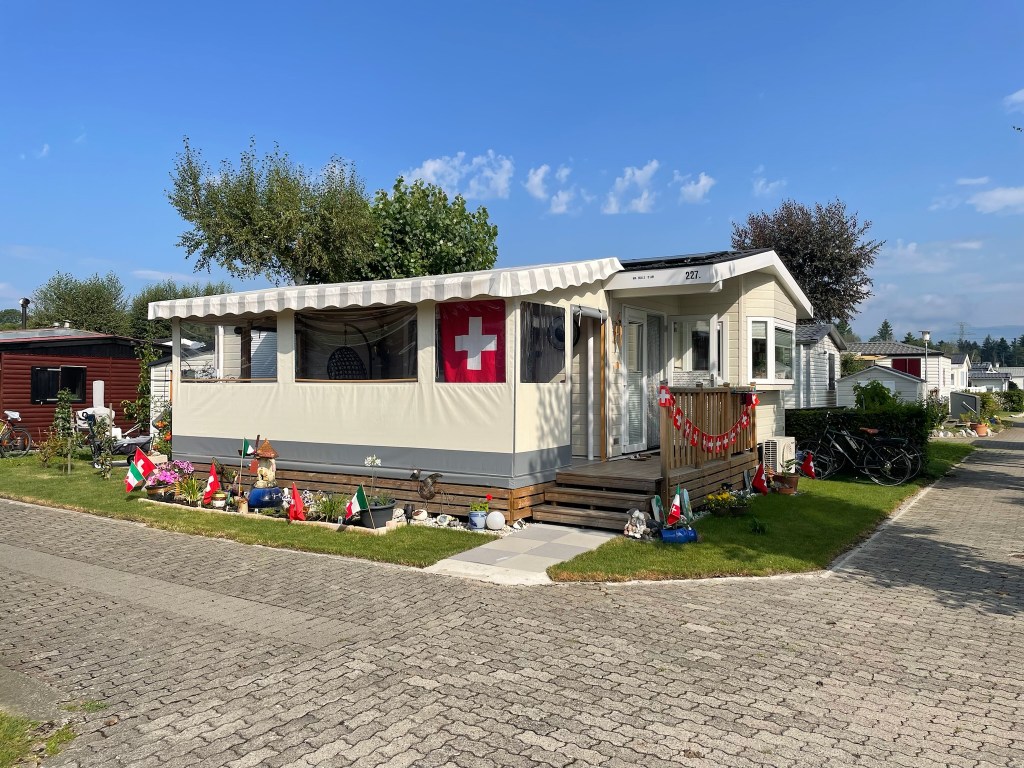
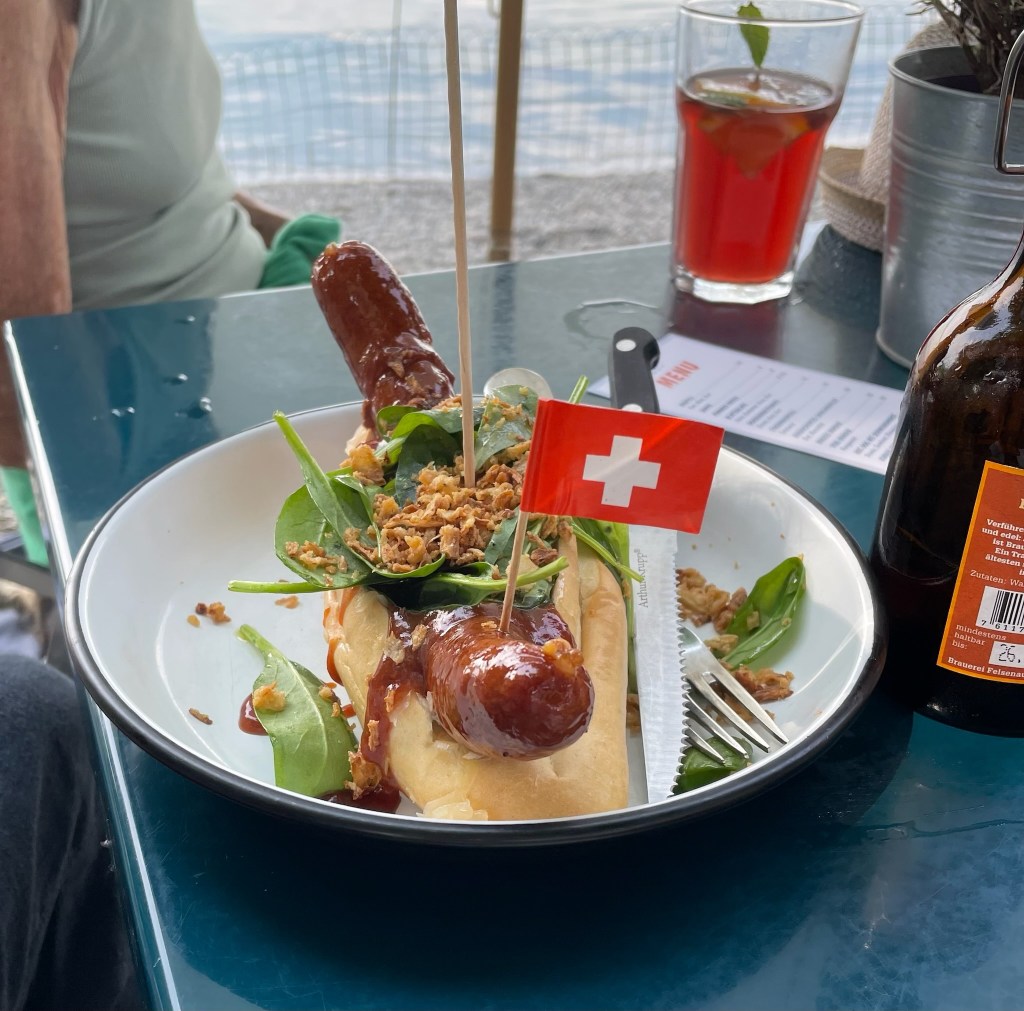
In Sugiez, we visited another traveller that Nick met on his journey in South America. Felix had booked a site for us in the Campingplatz where he lives – this was necessary because we were going to be staying there for Swiss National Day (1st August) and this would be an extremely busy time with everyone wanting to do something festive. And festive it was! There was a Fiesta in the Campground, with Bratwurst or Raclette available to eat and a choice of beer, local wine, or a variety of non- alcoholic options. They had a two man band playing until midnight and at about 10pm, they had a fireworks display.
The last time we were in Switzerland for their National Day was in 2000 and at that time, you could buy fireworks in the local town to set off at home. These days, there are moves afoot to allow each Canton to vote on whether private fireworks will continue to be permitted. And, unlike Australia, it isn’t because of the high number of injuries that occur, it is because of the noise which upsets pets, farm animals and the wild animals as well the rubbish that is left around and ingested by the wild animals.
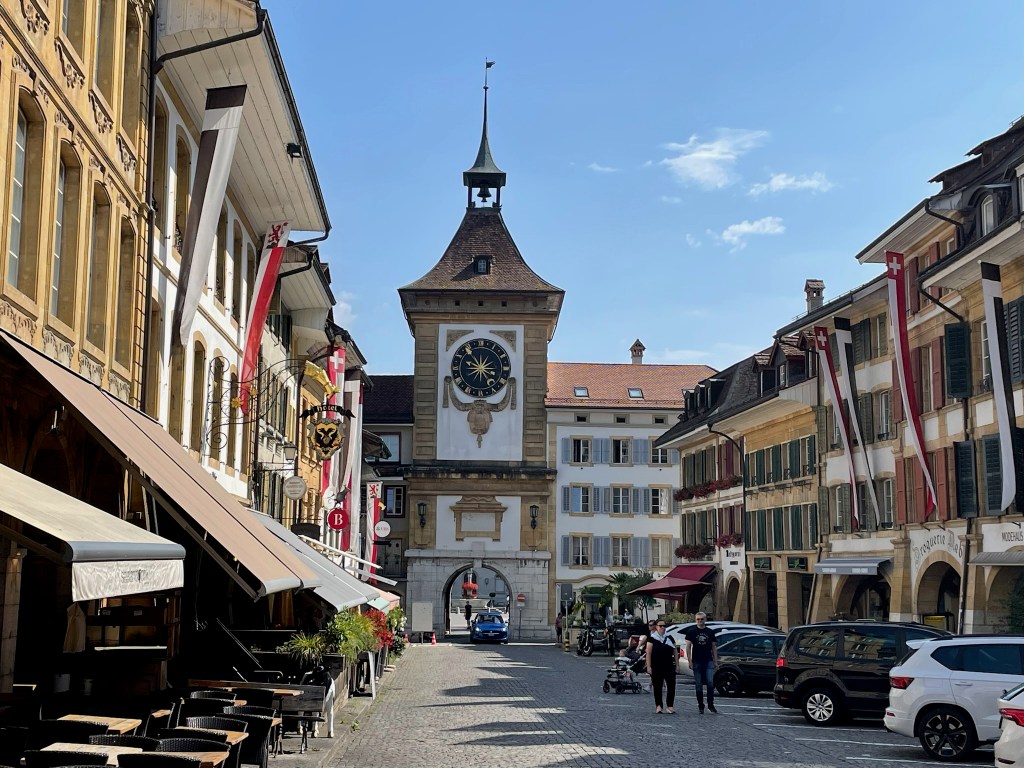
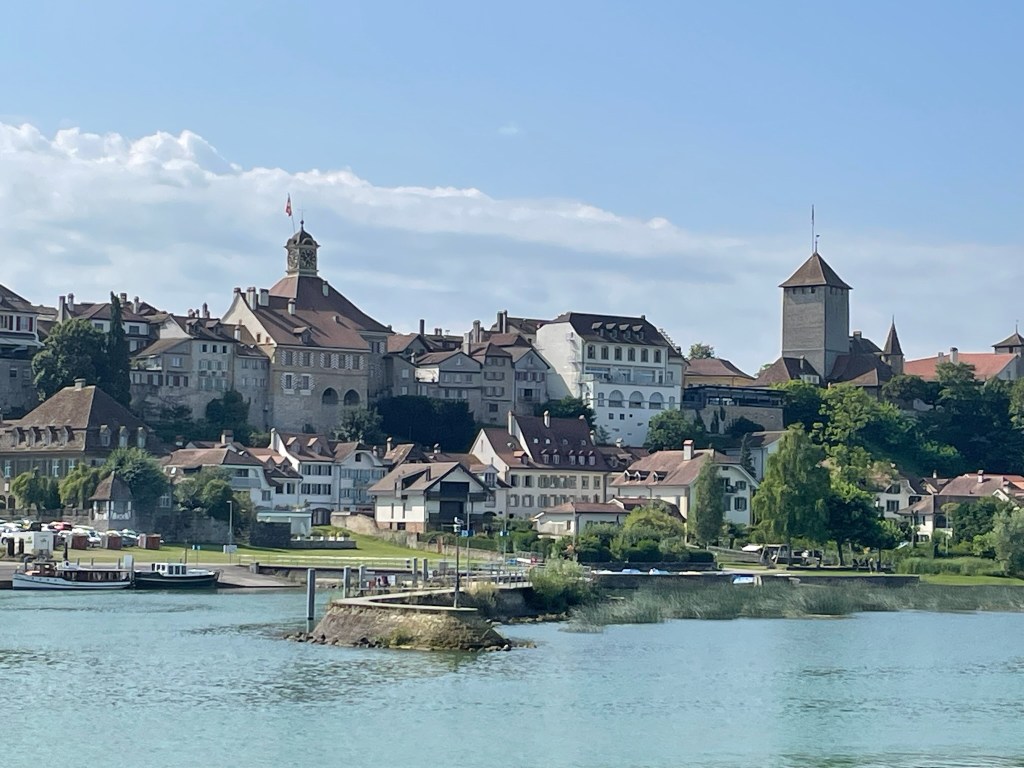
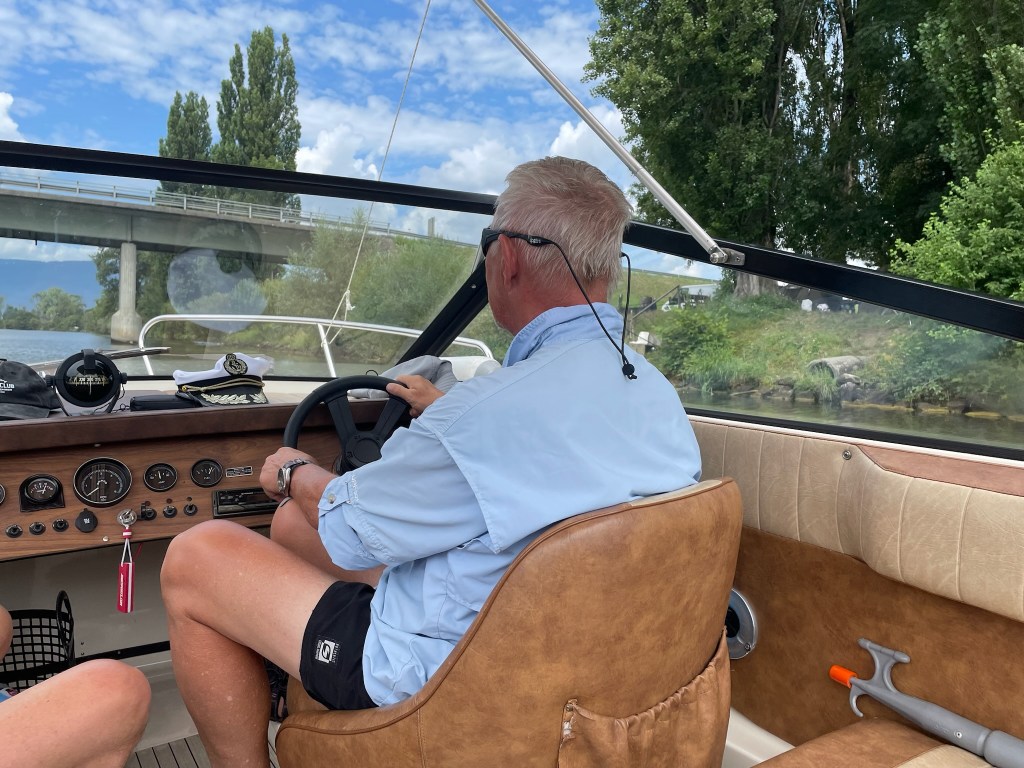
While visiting Felix, we explored around the three lakes district (Les Trois Lacs). We caught a ferry down to Murton which is on Murtonsee and walked back to Sugiez around the lake and through the forest. On the next day, Felix and Yvonne took us out in Felix’s boat up to Lac de Neuchâtel which is the largest of the three lakes, stopping for lunch in a lakeside café before heading back.
This was a new part of Switzerland for us to explore and we enjoyed doing just that. Though it tends to be a bit confusing about whether I should be speaking French or German. This area is the border of the two languages in Switzerland so both languages are widely spoken. Now that was a challenge!!
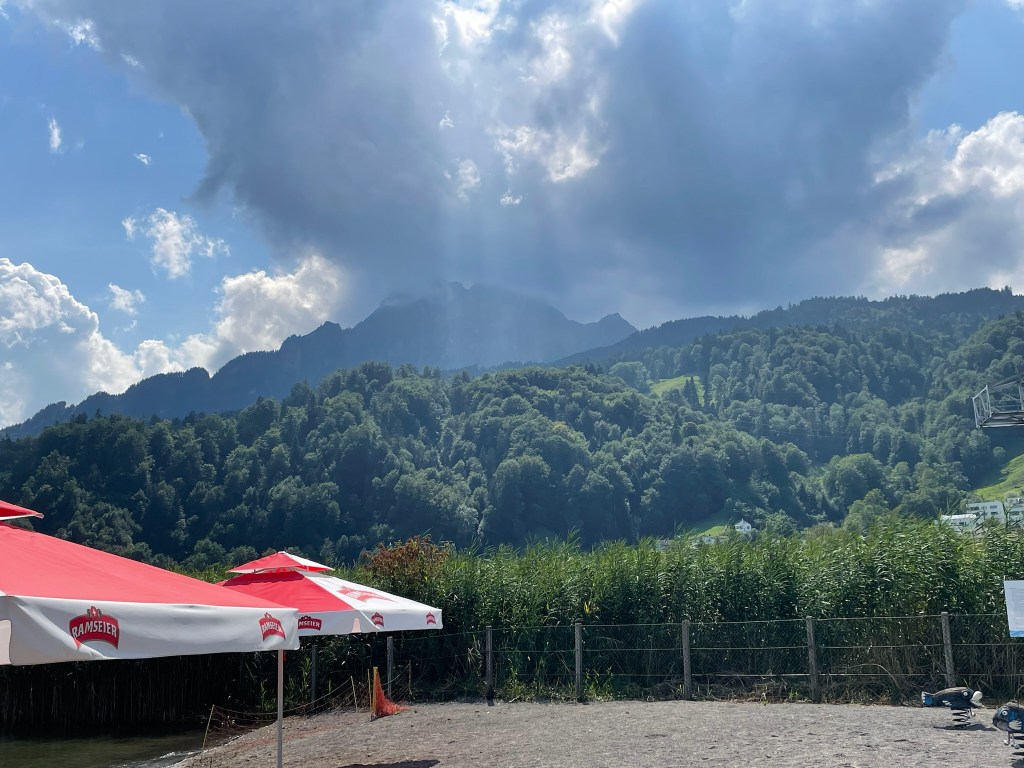
From Sugiez, we were off to Lucerne, which is a favourite town for us to visit. We decided to camp a little bit away from the main town centre, and stopped at a placed called Horw which is still on the Vierwaldstättersee, or Lake Lucerne, and the advantage of this location was that we could go for a swim in the Lake, which we were looking forward to as the weather had been very hot!
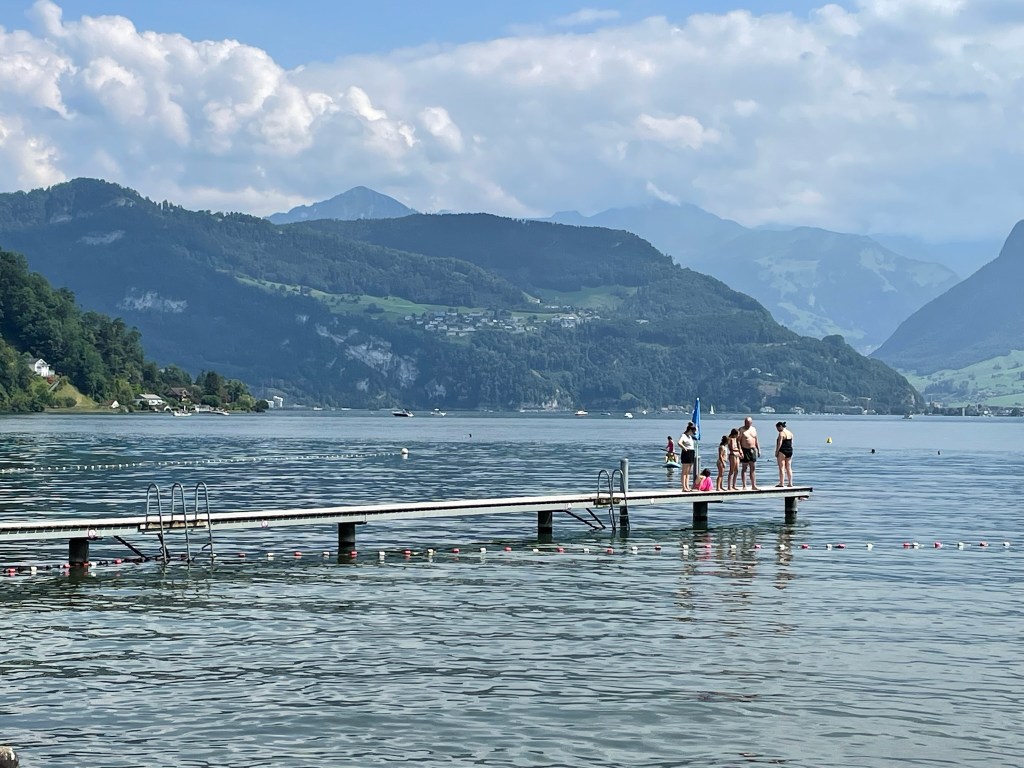
Now Switzerland is a country of many mountains, and in winter, these mountains have lots of snow and ice on them. And then in springtime, some of this snow and ice melts and runs down into the lakes, which means that even in the middle of a really hot summer, the lake is fecking freezing!!! But it did cool down our core temperatures which made it easier to sleep at night.
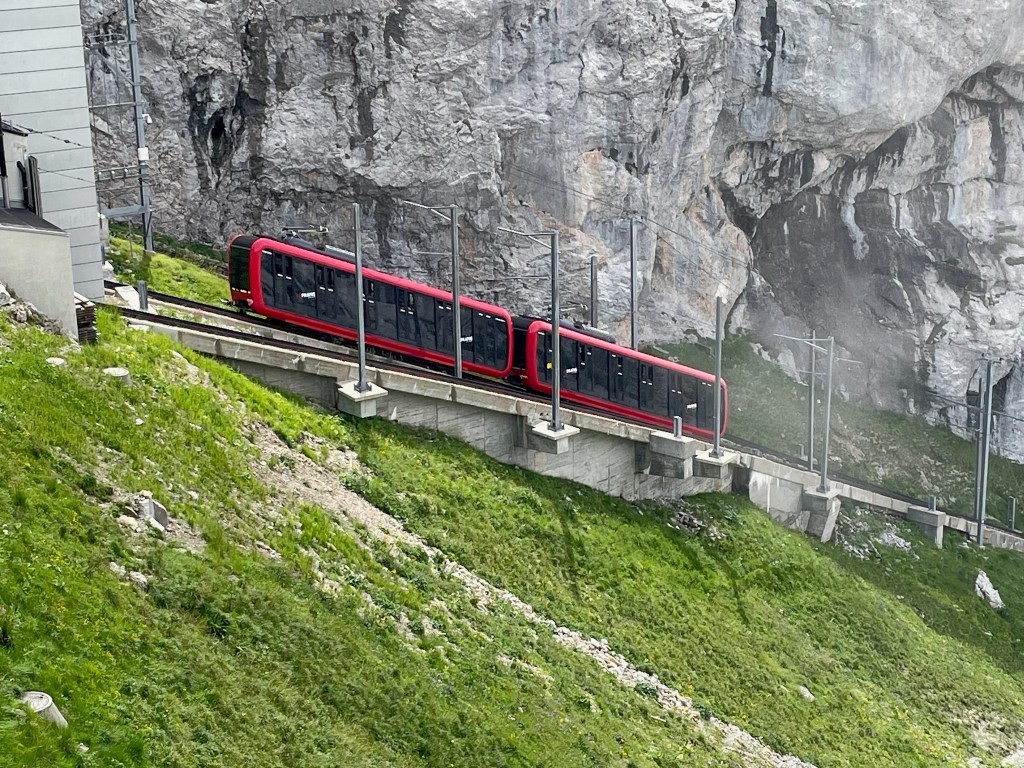
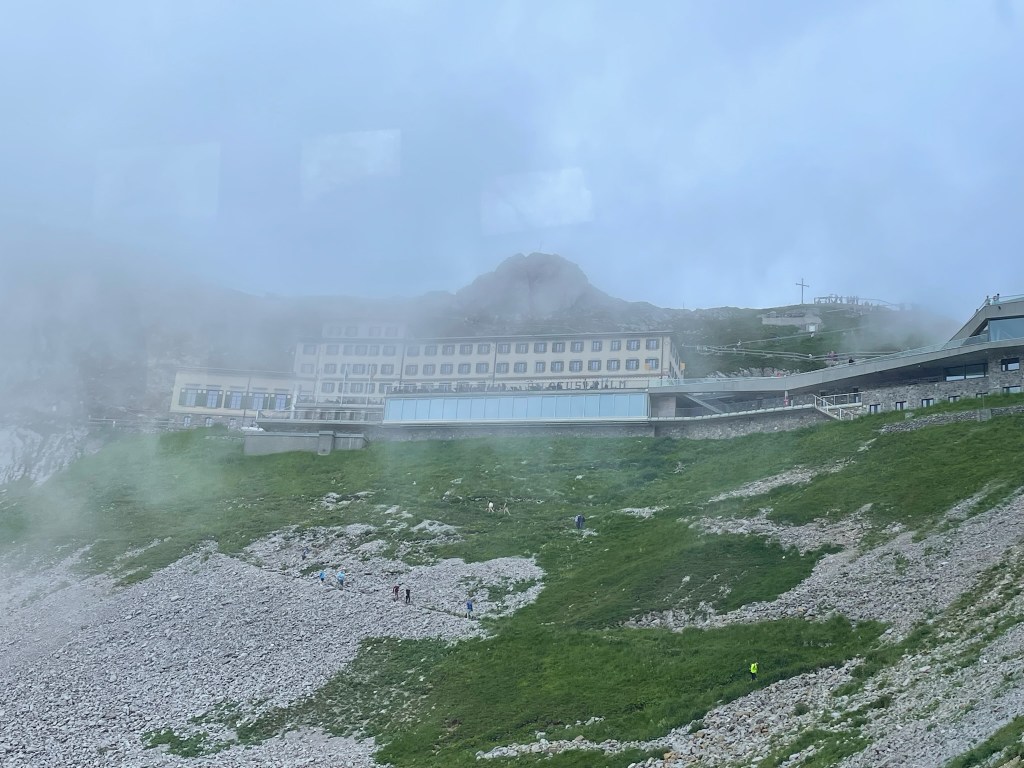
We also spent a day going to the top of Pilatus – no, not on foot but in the Cable Car and the Cog Railway – though we did see a lot of hikers walking up, some even pushing a pram! On a previous trip to Pilatus in winter, Lucerne was covered in fog but at the top of the mountain, above the fog, it was clear skies with lots of warm sunshine. For this visit, whilst it was sunny and hot down the mountain, at the top it was covered in cloud and quite cold. If you managed to find a break in the clouds, you felt a bit of warmth but those breaks were few and far between!
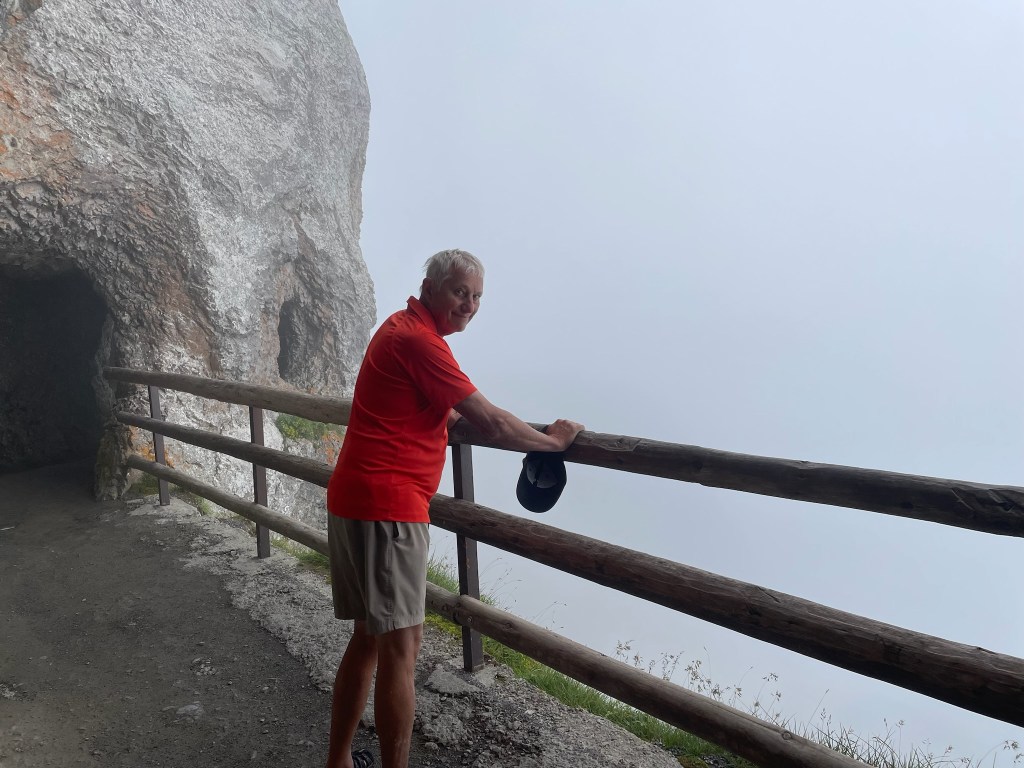
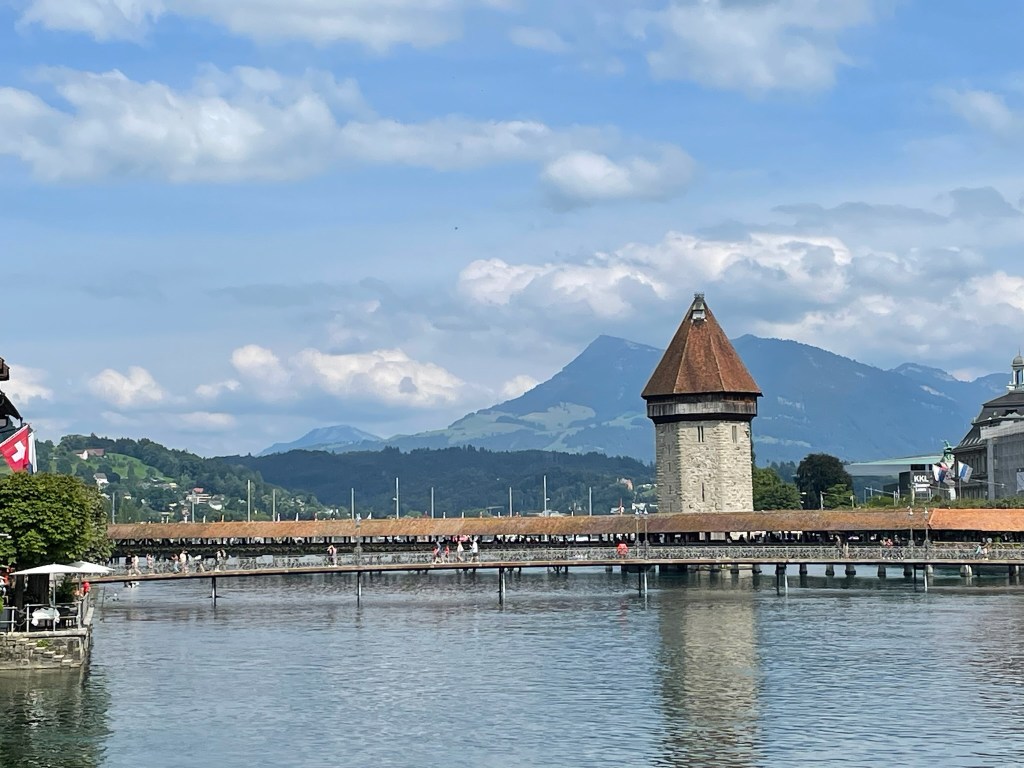
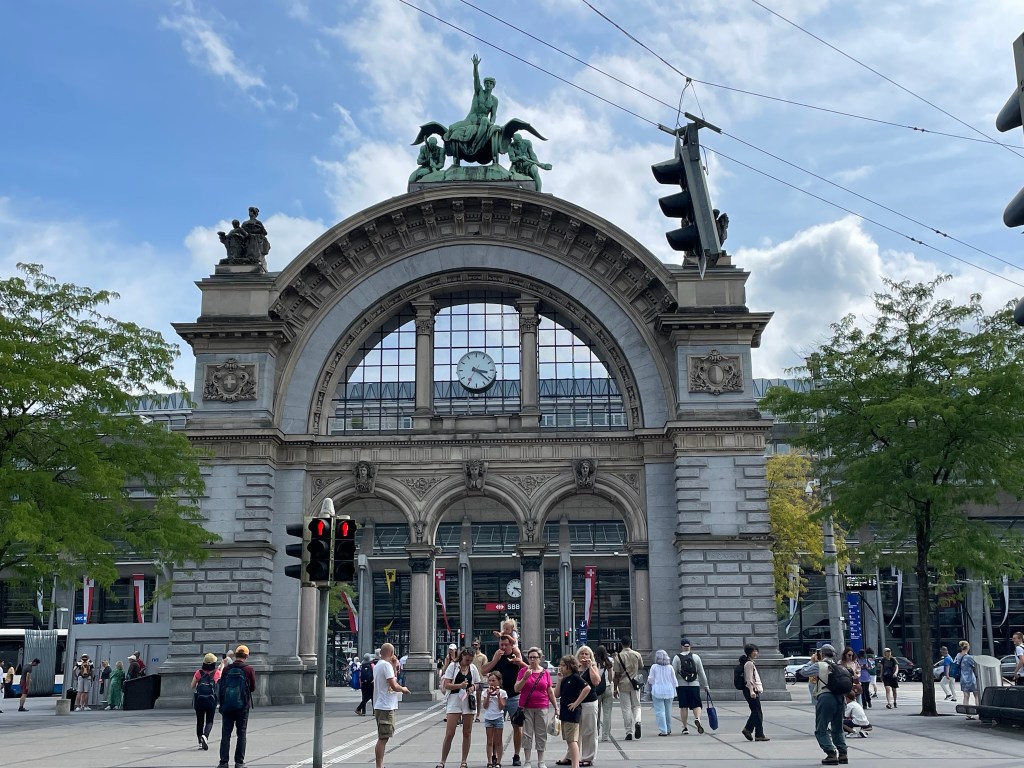
After lunch up on Pilatus, we headed back down to walk around Lucerne, enjoying the lake, the old town and not enjoying all the tourists.
And now it was time to head to Innsbruck in Austria but Nick had been looking at maps and checking on Google Maps and discovered that the route had planned to take had some major roadworks happening and there was a diversion around a couple of tunnels. Ok, this should be a problem, but then, last night he read that there had been a mud slide on the bypass and it was closed too. Suddenly we were faced with the problem of finding a route to Innsbruck. After much time spent researching, we had a route that would take us almost to Munich before heading into Austria. This route change meant the difference of driving 336kms or driving 500+kms, via Munich.
We had resigned ourselves to the longer option but about 5 minutes before making the crucial turn-off, we decided to check again and suddenly, there was no mention of the bypass road being closed, so we scrapped the alternate plan, and returned to the original plan, which included driving up through the Arlberg Pass. Wow! Totally amazing!!
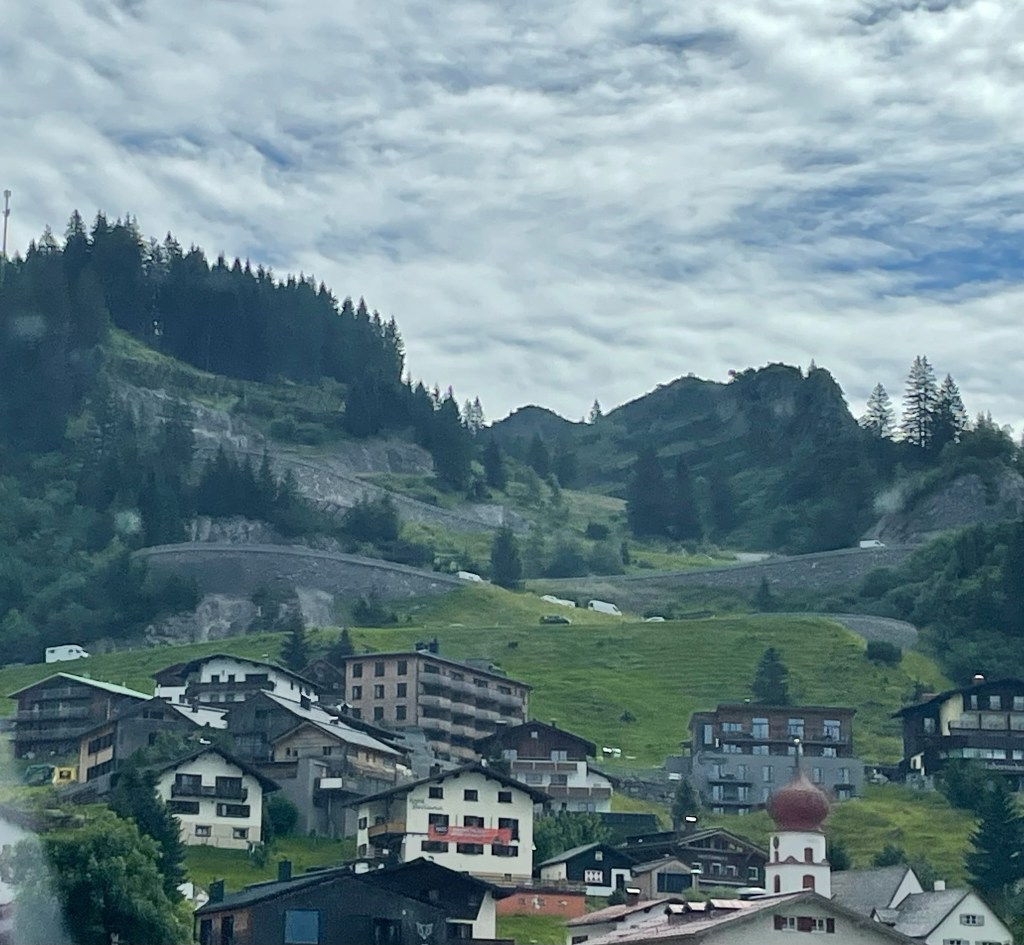
But now we have reached Hall in Tirol and we have half a day up our sleeve where we can relax and explore a new town. Till next time…


 Nick & MJ On The Road
Leave a comment